We inspected a three-bedroom tract home in the Twin Lakes area earlier this year. The original 1,500 square feet was a clean, typical Garden Grove floor plan, and a fourth bedroom had been added off the back at some point, sharing the original central air system. The seller had just replaced the condenser, and the listing leaned hard on the new equipment.
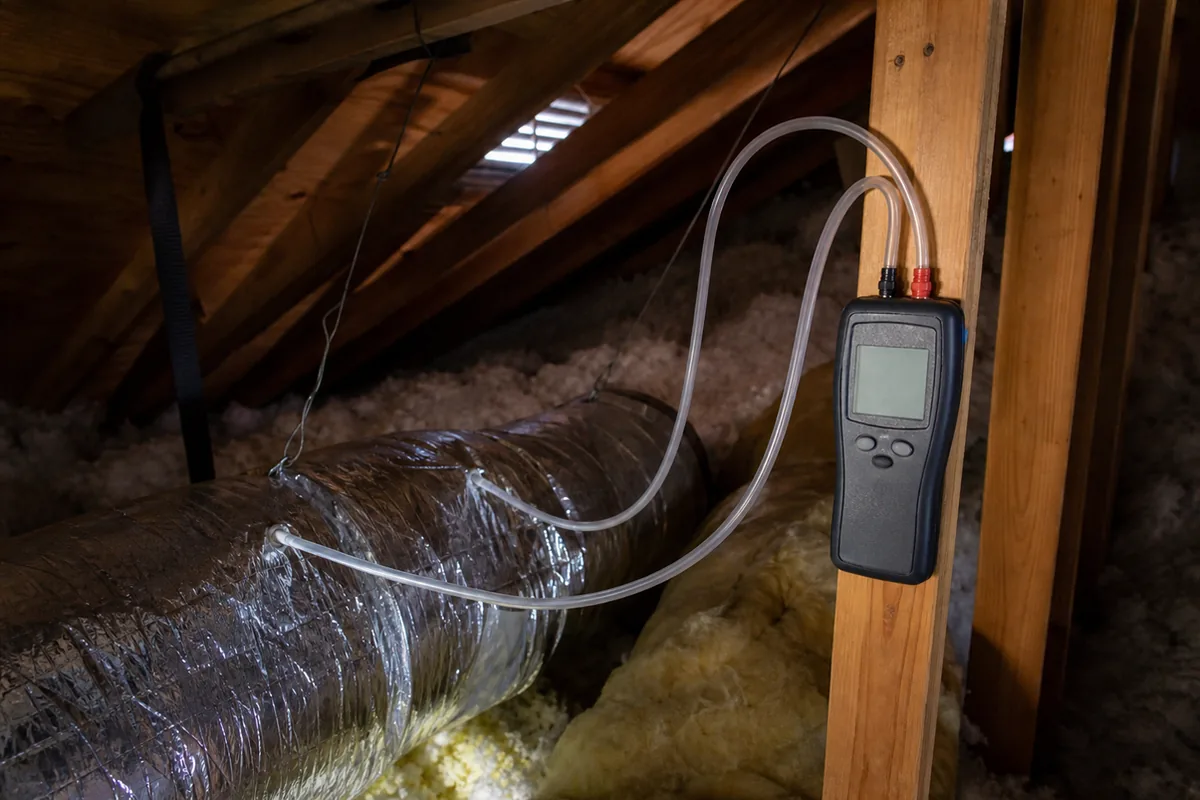
We closed the added bedroom’s door, turned the system to cooling on high, and checked static pressure at the return. It was well above what the equipment was rated for, and the room pressurized noticeably with the door shut, the kind of imbalance that shows up when a system built to serve three bedrooms is now serving four with no return air path added for the new room.
The new condenser outside told the buyer nothing about the ductwork inside the walls.
Schedule a Garden Grove inspection · Same-day report · Pay-at-closing available
Here is how that one resolved. We documented the static pressure reading, the door-closed pressurization test, and the single central return serving four bedrooms in the same-day report, and told the buyer plainly that an HVAC contractor should evaluate whether the added room needed its own return path before they relied on the new equipment to actually cool it. The contractor’s bid came back for a transfer grille and a duct modification, a modest fix relative to the price of the home. The buyer’s agent used that bid to negotiate a credit, and the deal closed. The point was never that the new condenser was wasted money. It is that in Garden Grove’s decades of tract additions, the equipment gets replaced far more often than the ductwork gets checked, and a buyer who only looks at the age of the condenser is looking at the wrong number.
Why this matters for the agent
Garden Grove’s housing stock is overwhelmingly single-story, single-system tract homes that have been added onto for six or seven decades, and the return air side of the HVAC system is the part almost nobody checks.
Three things tend to ride on this. First, comfort complaints. A buyer who moves in and finds one bedroom runs hot no matter what the thermostat says is living with an airflow problem the inspection could have caught. Second, the cost gap. Sellers routinely point to a new furnace or condenser as proof the HVAC is handled, and equipment age tells you nothing about whether the duct system was sized for the home as it exists today. Third, the energy bill. A system fighting an undersized return works harder for less output, and that shows up on the utility bill long before anyone traces it back to the ductwork.
If you work Garden Grove’s tract neighborhoods, this is close to universal inventory. The city was built almost entirely in a fifteen-year window, and a large share of those homes have had at least one addition since.
What an undersized return actually does to a home
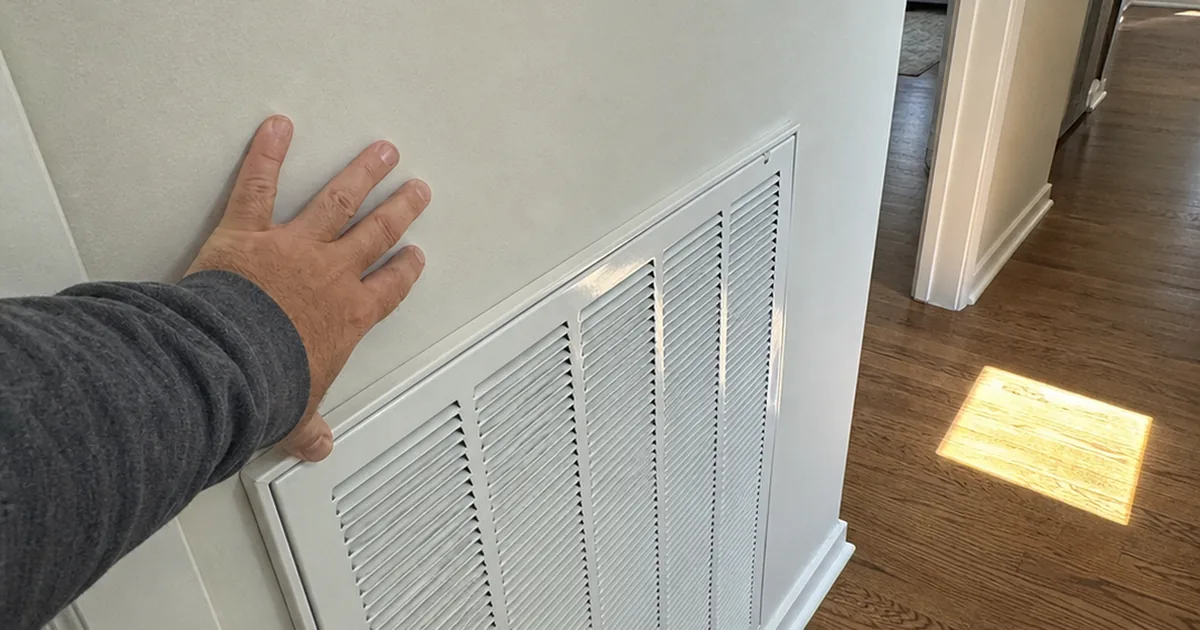
The mechanism is simple once you understand what a return air path is for.
A forced-air system needs a return path at roughly the same volume as what it supplies, or the air it pushes into a room has nowhere to go back to the furnace or air handler. In most Garden Grove tract homes, that return path was designed in the 1950s or 1960s for the home’s original three-bedroom footprint, typically a single central return in a hallway, sized for the square footage that existed at construction. When a bedroom gets added later, whether as a full room addition or a garage conversion, the new space is usually tied into the existing supply ductwork because that is the easy part. The return side gets skipped, because running a new dedicated return duct back to the central plenum is more work and most contractors doing a fast addition do not do it.
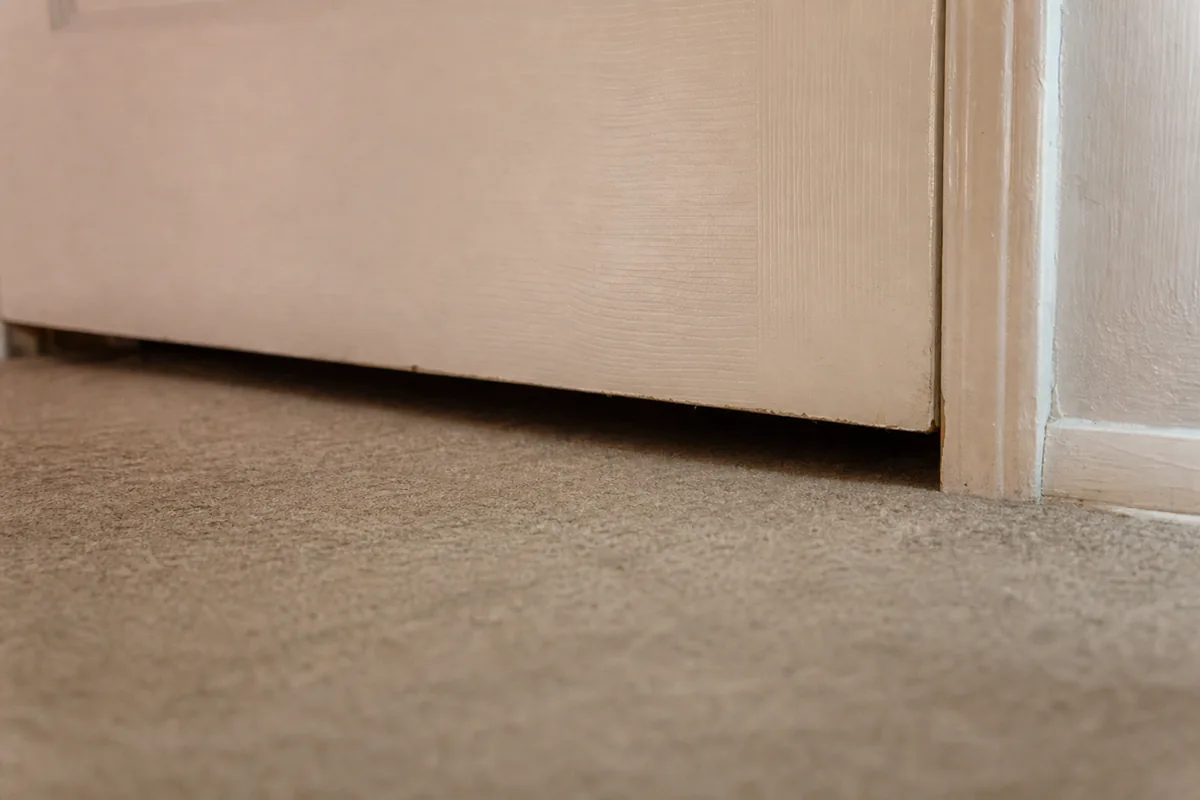
The result is a room with air blowing in and no path for it to leave. Close the door, and the room pressurizes. That pressure pushes conditioned air out through every gap it can find, door undercuts, electrical outlets, recessed lighting, window frames, rather than back to the return grille where it belongs. The blower has to work harder against the higher static pressure, which increases the load on the equipment and the utility bill, and the room that was added often ends up the least comfortable room in the house, exactly backward from what the addition was supposed to deliver.
ACCA Manual D, the ANSI-recognized standard for residential duct design, exists specifically to size supply and return ducts to the load they are actually serving. ENERGY STAR’s own return air specification sets a real number on this: with bedroom doors closed and the system running at its highest fan speed, the pressure differential between that room and the rest of the house should not exceed about 3 pascals. Most of the added rooms we test in Garden Grove blow well past that number, because nobody ran the calculation when the room went in.
Why this shows up so often specifically in Garden Grove
Garden Grove incorporated in 1956 in the middle of one of the fastest population booms any Orange County city has seen, adding roughly 17,000 residents in its first year alone as tract builders raced to keep up with demand. The homes that went up were efficient, standardized, three-bedroom, one-bath plans averaging around 1,500 square feet on lots as large as 14,000 square feet, plenty of room for exactly the kind of rear-yard addition that has been happening in this city for seventy years. Every decade since has added its own layer: a family room in the 1970s, a converted garage in the 1990s, and now an accessory dwelling unit under the state’s current ADU rules. Each addition usually got a permit for the framing and the electrical. Far fewer got a return air calculation.
What agents should tell every buyer on a Garden Grove home with an addition
A short list buyers writing offers on any added-onto Garden Grove home should hear from you before they go into escrow.
- New equipment does not mean a correctly sized duct system. Ask when the ductwork, not just the furnace or condenser, was last evaluated.
- If a bedroom or family room was added, ask whether it has its own return air path, a dedicated duct, a transfer grille, or a jump duct over the door. If nobody knows, assume it does not.
- A room that runs noticeably hotter or colder than the rest of the house with the door closed is a real diligence flag, not just a matter of personal comfort.
- Budget for the possibility of a return-air fix as its own line item, typically a transfer grille or duct addition, well short of a full system replacement.
- Ask whether the addition itself was permitted. Unpermitted additions in Garden Grove are common enough that it is worth confirming before you assume the ductwork was inspected at all.
Red flags during showings (no special tools required)
You do not need a static pressure gauge to flag an airflow concern at a showing. Add these to your walk-through on any Garden Grove home with an addition.
- A noticeably different temperature in an added room compared to the rest of the house, especially with the door closed for a few minutes.
- A single central hallway return grille and no visible return grille in an addition or converted garage.
- Doors that are hard to open or close in an added room, which can be a sign of sustained pressure buildup.
- A whistling or rushing sound at door undercuts or outlet covers in an added room when the system is running.
- Any addition, garage conversion, or accessory unit that the seller cannot confirm was permitted.
- A recently replaced furnace or condenser paired with ductwork that looks original, a mismatch worth asking about directly.
None of these prove a duct sizing problem on their own. All of them are reasons to ask for an HVAC contractor’s evaluation before the contingency period ends.
Schedule a Garden Grove inspection
The negotiation playbook when a return air problem surfaces in escrow
There are four paths most of these deals end up on. Knowing them in advance helps you steer.
Seller fixes the return path before closing is straightforward when the fix is a transfer grille or a single duct run, which is often the case. Get a contractor’s confirmation that the fix was completed and that the room now tests within a reasonable pressure range, not just a verbal assurance that someone came out.
Seller credits the buyer to handle it after closing is the most common outcome. Size the credit to an actual HVAC contractor bid, informed by the static pressure reading and the addition’s square footage, rather than guessing at the cost.
Buyer walks under the inspection contingency is rare for a return air issue alone, since the fix is usually modest, but it becomes relevant if the airflow problem is paired with a larger unpermitted-addition question the buyer is not comfortable inheriting.
Deal closes with the buyer planning the fix as an early project is common when the room in question is a bonus space rather than a primary bedroom. Document the buyer’s informed decision, keep the static pressure reading in the file, and treat the fix as a near-term to-do rather than something to defer indefinitely, since the equipment is working harder the whole time it is unaddressed.
How the inspection actually catches it
A walk-through that just confirms the air conditioner turns on will miss this every time, because the equipment working is not the same as the duct system being sized correctly. Catching it takes a pressure test.
We check static pressure at the return and test room pressurization with doors closed on any home with a visible addition, so an undersized return shows up as a number, not a guess. We trace the supply and return layout through the attic where access allows to confirm whether an added room has its own return path or is relying on the original central return alone, and we run thermal imaging at supply and return grilles to see how evenly the system is actually distributing air room to room. An undersized return is rarely the only thing working against the system up there; see our Woodland Hills attic insulation and ventilation guide for the insulation and airflow problems that make the same equipment work even harder. When the numbers point to an undersized or missing return, we say so directly in the same-day report and tell the buyer an HVAC contractor should quote the fix, because the inspection documents the airflow problem, the contractor prices the duct work.
The buried-system side of an older Garden Grove tract tells a similar story below ground, which we cover in our sewer lateral root intrusion guide for the same generation of Orange County housing stock. And the way thermal imaging reveals airflow and moisture issues together is in our piece on why infrared scanning matters. For the broader picture of what we cover on every inspection, see what’s included.
Quick FAQ for buyers and agents
Is this specific to homes with additions? Mostly, yes. Original, unmodified Garden Grove tract homes were generally built with a return sized for their original square footage. The mismatch shows up once a room gets added without a matching return path.
Does a new furnace or condenser fix this? No. New equipment can be correctly sized for the home’s total load and still be starved for return air if the ductwork was never updated to match. The two are separate questions.
What does fixing an undersized return cost? A transfer grille or a single added return duct is a modest repair, generally a few hundred dollars. A larger rework, if the whole system needs rebalancing, costs more and is worth a contractor’s written scope before you negotiate.
How common are additions in Garden Grove specifically? Very common. The city was built out almost entirely in a compact post-war boom, and decades of family rooms, garage conversions, and now accessory dwelling units have followed on the same original lots.
Does an unpermitted addition make this worse? It often does, because unpermitted work is less likely to have had any HVAC calculation done at all. Confirming permit status is a reasonable step before relying on any addition’s systems.
The honest summary for agents
If you work Garden Grove, you are selling homes that have been quietly modified for seventy years, and the HVAC ductwork is one of the systems least likely to have kept up with those changes. The airflow problems caught with a pressure gauge during the inspection contingency are negotiations. The ones a buyer discovers as a hot bedroom every August are just something they live with, or pay to fix twice as expensively later. Your buyer is far better served by the first.
The inspection that catches it is not the one that confirms the air conditioner runs. It is the one that tests the return, traces the ductwork to every addition, and tells the buyer plainly when a contractor needs to price the fix, with a same-day report so you have the documentation in hand before the contingency clock runs out.
Schedule a Garden Grove inspection or see our full inspection scope before you book. Want to see what the finished report looks like? Here is a sample inspection report. Common questions are answered in the FAQ. For the buried-system side of the same housing stock, read our sewer lateral root intrusion guide, and see why infrared scanning matters on older homes. And for the termite and wood-decay questions in the same post-war framing one city north, our Fullerton termites and wood-destroying organisms guide covers the WDO report lenders ask for. For the cooling equipment itself rather than the ductwork distributing its air, our Perris central air conditioning guide covers the refrigerant, airflow, and condensate defects we route to when a return-air fix alone does not explain a system’s poor performance. For an indoor air quality question that surfaces on the same nearby tract-home remodels, our Fountain Valley formaldehyde and engineered wood guide covers what a fresh kitchen or flooring remodel means for a buyer’s air quality.