The Fireplace Nobody Inspects: A Brentwood Agent’s Guide
The living room was the reason the house sold itself. A 1936 Spanish home off Kenter, beam ceiling, arched doorways, and a big plastered masonry fireplace at the center of the room with a carved wood mantel and built-in bookcases wrapping around it. Everybody who walked in looked at that fireplace. Nobody looked into it.
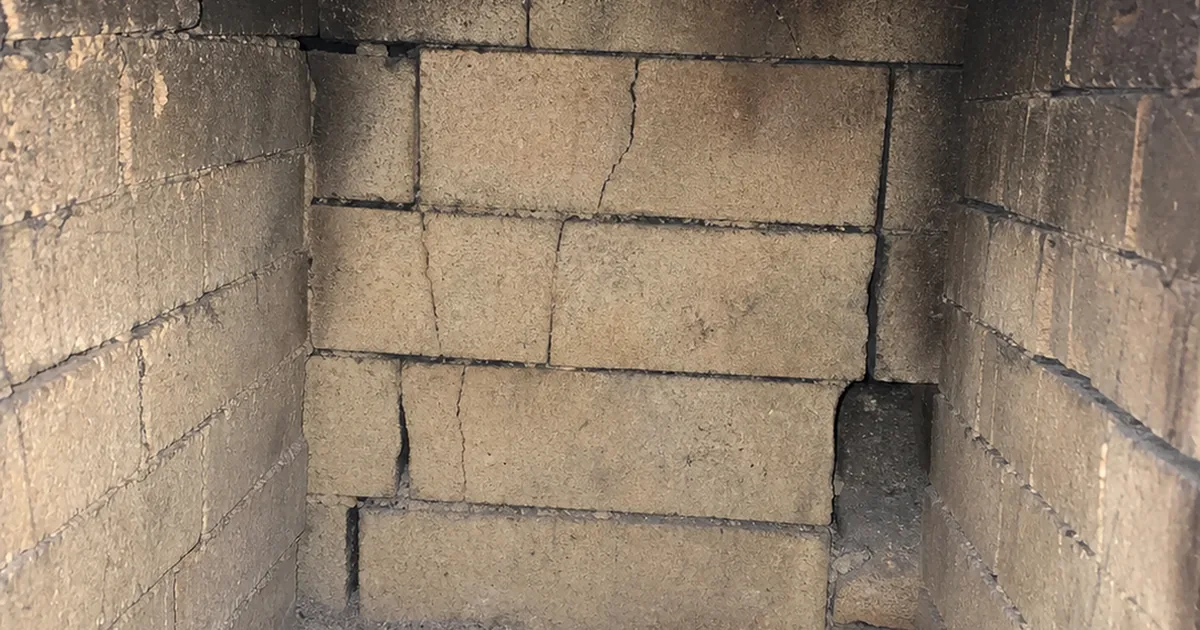
When we did, the firebox told a different story than the room. The firebrick at the back had cracked and several mortar joints had washed out, so you could see daylight-colored gaps into the masonry behind the fire. The carved mantel and the wood trim ran right up to the edge of the opening with no clearance at all. Up top, the flue had no rain cap and no spark arrestor, the crown was cracked, and a phone camera dropped down the flue showed a liner that was crazed and coated in hard, shiny creosote from decades of wood fires. None of that showed from the couch. It was a beautiful fireplace and it was not safe to light.
That is the pattern in Brentwood, and the same one runs through the older stock in neighboring Pacific Palisades and Santa Monica. The homes here are old enough and grand enough to have real masonry fireplaces, the fireplaces are the emotional center of the sale, and they are the single component that a buyer, an agent, and often the last three owners all walked past. This guide is about reading the fireplace the way the fire does.
Why this matters for the agent
Here is what is at stake. A masonry fireplace is a solid-fuel-burning appliance built out of brick, and when it fails it fails toward a house fire or toward carbon monoxide in the living room. Those are not deferred-maintenance problems that get worse slowly and cost a little. They are the two failure modes that hurt people. An agent who treats the fireplace as decor is quietly carrying the one risk in the house that has a body count attached to it.
It is also a repair-cost problem, and a big one. Buyers assume a fireplace either works or does not. In fact a masonry chimney can need anything from a fifty-dollar rain cap to a full relining or a rebuild above the roofline that runs into five figures, and the range is invisible from inside the room. When the finding lands late in escrow with no number attached, the deal stalls while everyone guesses. When the fireplace is understood up front, it is one of the more negotiable items in the house, because the fixes are well defined and the trade that does them is specialized and used to quoting them.
And the Brentwood twist is the canyon. Much of this market sits against the Santa Monica Mountains in Mandeville, Kenter, and Sullivan canyons, which is wildland-urban interface. A chimney with no spark arrestor is throwing embers in exactly the place where embers matter most. That single sixty-dollar screen belongs on the report every time.
Why Brentwood specifically
Brentwood’s housing was built for this article. The flats and Brentwood Park are full of 1920s through 1940s Spanish Colonial and Traditional homes designed around a masonry fireplace, and the canyons and Crestwood Hills add mid-century post-and-beam houses where a brick or block fireplace is the one heavy masonry element in an otherwise light wood-and-glass building. These fireplaces are original, they are eighty and ninety years into a service life nobody planned, and they have been remodeled around. Owners added carved mantels, floated built-in cabinets up to the opening, plastered over the old brick, and installed gas log sets in fireboxes that were built for wood. Every one of those changes can quietly defeat a clearance or hide a defect, and none of them is visible from the room.
This is not the earthquake story. Whether an unreinforced masonry chimney will shed brick in a quake is a real and separate question, and our Glendale masonry chimney guide covers it. It is also not the factory-built metal fireplace found in newer homes, which fails in its own ways; our Encino prefab fireplace guide covers that one. This is the old masonry firebox and flue, and whether it is safe to burn in.
What the standards actually ask for, in numbers you can use
You do not need to be a mason to hold the key numbers in your head, and they give you something concrete to look for.
The hearth extension is the noncombustible floor in front of the opening, and it is sized to the opening. For a fireplace opening smaller than six square feet, the extension is supposed to reach at least sixteen inches in front of the opening and eight inches past each side. For an opening six square feet or larger, that grows to twenty inches in front and twelve inches to each side. The point is simple. A log or an ember that rolls out lands on brick or stone, not on wood flooring or a rug over subfloor.
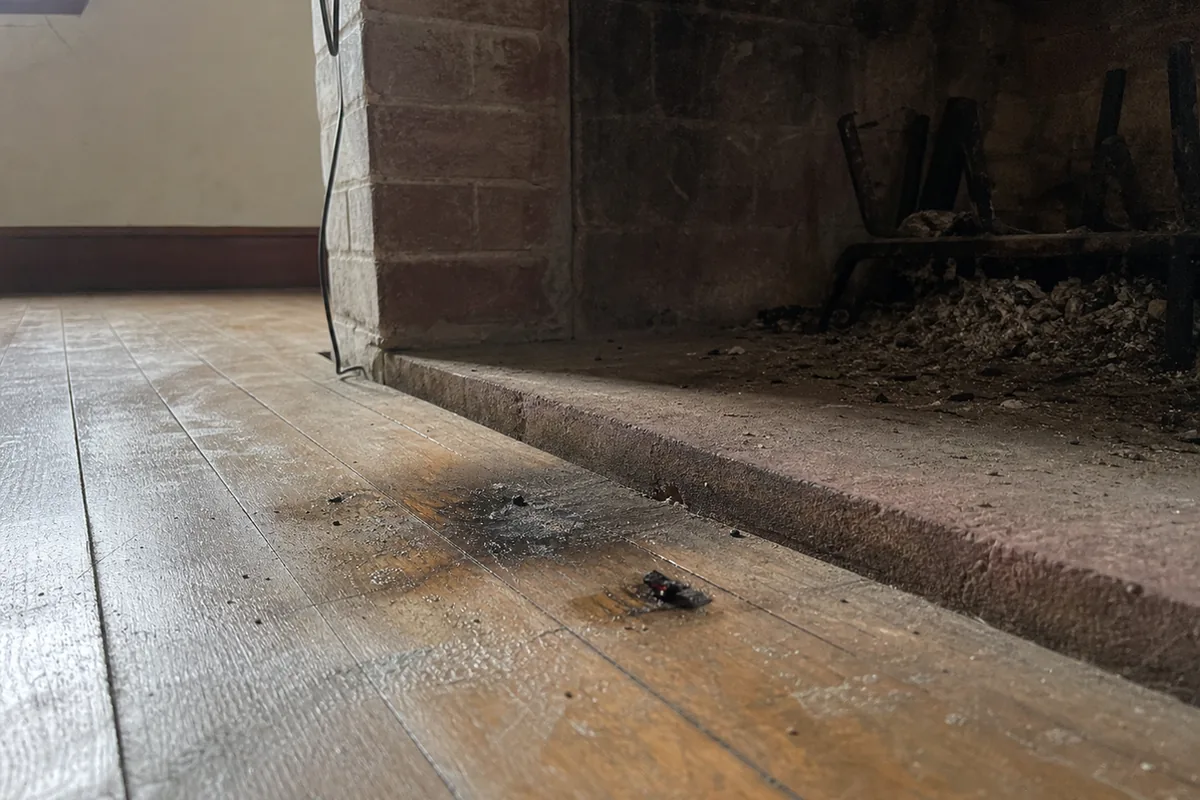
Combustible material near the opening has its own rule. No combustible mantel or trim is supposed to sit within six inches of the fireplace opening, and anything combustible within twelve inches of the opening cannot project more than one eighth of an inch for each inch it stands away from that opening. In plain terms, the closer a wood mantel gets to the fire, the thinner and flatter it has to be, and a deep carved mantel crowding the opening is a defect you can often see from the couch once you know to look.
Up on the roof, chimney height follows what inspectors call the three-two-ten rule. The chimney is supposed to end at least three feet above the point where it passes through the roof, and at least two feet above any part of the building within ten feet of it. A chimney that stops too low does not draft properly and can push smoke and combustion products back into the house.
Finally, the top of the flue in California is supposed to carry a spark arrestor, a metal screen with openings no smaller than three eighths of an inch and no larger than one half inch. It keeps embers in and animals out, and in a canyon it is a wildfire item, not a nicety.
We do not certify code compliance and we are not the chimney contractor. What we do is measure against these plain benchmarks and tell a buyer when the fireplace in front of them does not meet them.
Schedule a Brentwood inspection →
What actually goes wrong
The failures repeat across the older Brentwood stock, and most of them hide behind a good-looking room.
A cracked or spalling firebox is the headline. The firebrick and the thin refractory mortar joints that line the firebox take direct heat for decades and eventually crack, and open joints let heat reach the brick and framing behind the firebox. It is the most common serious finding we write on an old masonry fireplace and it is invisible until you actually look inside and up.
A missing or short hearth extension is second. Original hearths get shortened when floors are redone, or they were never deep enough, and a wood floor or a rug over combustible subfloor ends up sitting right where embers land.
Combustible material crowding the opening is third. A remodel adds a deep wood mantel, a floating shelf, or a run of cabinetry that closes the clearance the fireplace was built with. It looks like design. It is a clearance defect.
A failed or missing flue liner is fourth, and it is the expensive one. Many pre-war chimneys were built with unlined flues or with clay tile liners that have since cracked, and a compromised liner lets heat and combustion gases reach the masonry and anything near it. You cannot see this from the room. It takes a light and a camera dropped down the flue.
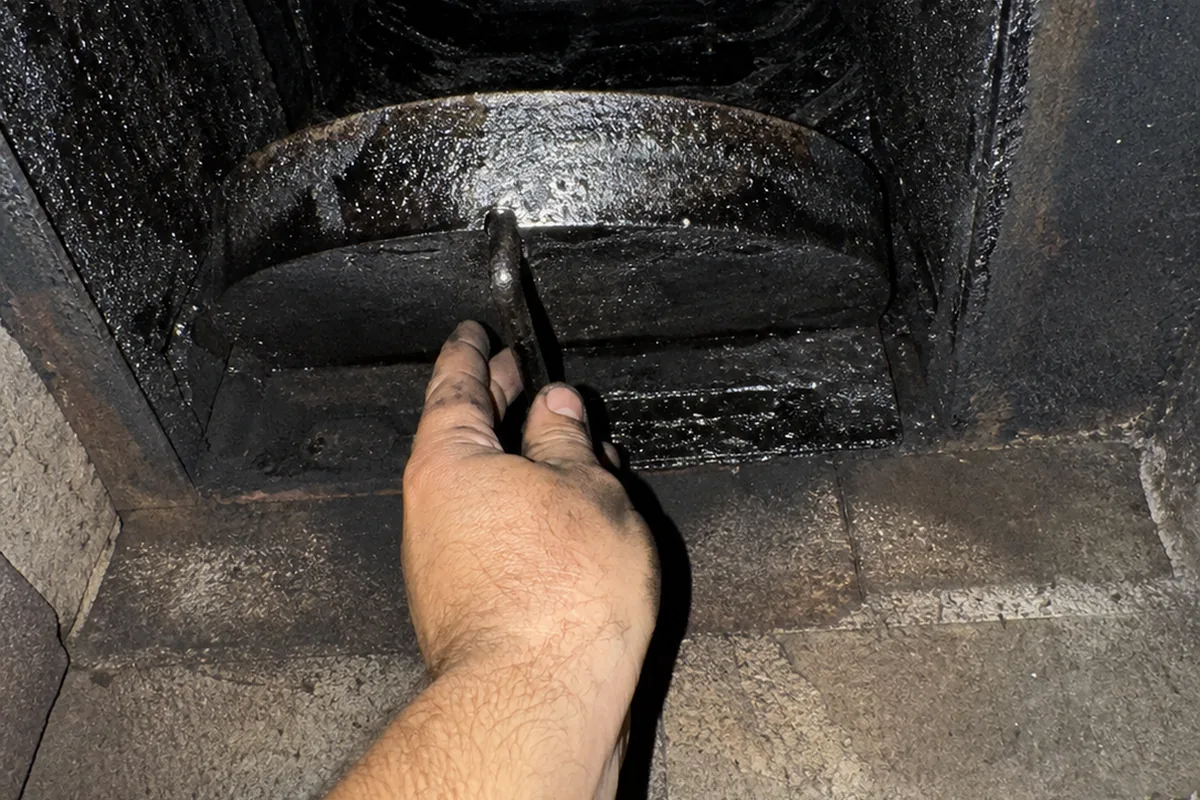
Heavy creosote is fifth. Years of wood fires glaze the flue with hard, shiny creosote that is itself the fuel for a chimney fire. A fireplace that has clearly been burned a lot and never swept is a fireplace to have cleaned and internally inspected before anyone lights it again.
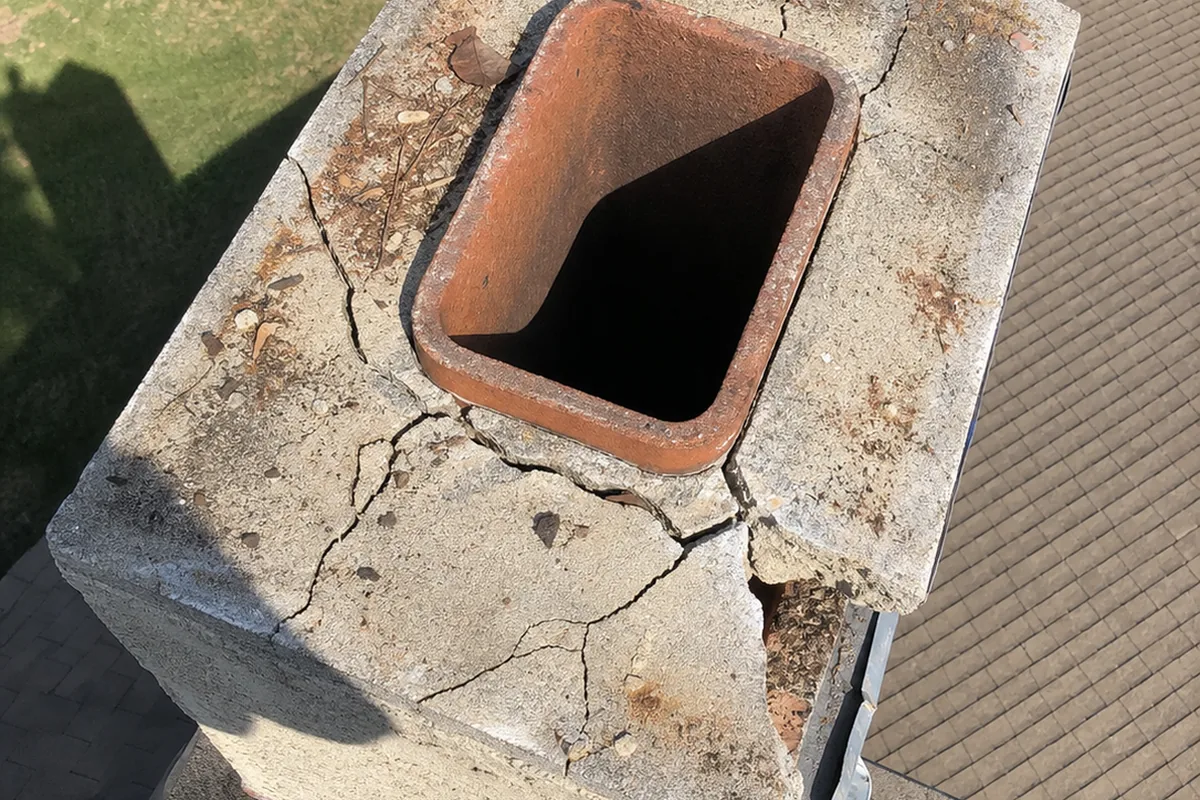
The chimney top is the quiet sixth. A cracked crown, missing flashing, no rain cap, and no spark arrestor are all common, all visible from a drone, and all cheap next to the liner and the firebox. The cap and the arrestor in particular should be on every canyon-adjacent report.
A gas log set dropped into a wood firebox is the seventh, and it hides the other six. Once there are ceramic logs and a burner in the box, everyone assumes the fireplace is fine, when in fact the damper may be clamped open, the firebox may be cracked underneath, and nobody has looked up the flue in twenty years.
What agents should tell every buyer
When a buyer is under contract on an older Brentwood home with a masonry fireplace, give them these points before the inspection.
- The fireplace is an appliance, not decor. It burns fuel and vents combustion, and it deserves the same scrutiny as the furnace.
- A home inspection of the fireplace is visual and has limits. We report what we can see and reach. The inside of the flue is read with a light and a camera, and a full internal evaluation is a chimney specialist’s Level 2 inspection.
- At a sale is exactly when that specialist inspection is recommended. A home changing hands is the standard trigger for a camera up the flue, before the first fire under new ownership.
- Budget a range, not a number. A fireplace can need a sixty-dollar cap or a five-figure reline. The inspection tells you which end of that range you are looking at.
- In the canyons, the spark arrestor is a fire item. If the chimney is uncapped and unscreened against the Santa Monica Mountains, that is a same-week fix.
- Do not assume gas logs mean the fireplace is sound. They often sit on top of every problem in this list.
A buyer who hears this stops seeing a charming hearth and starts seeing a system that either vents fire safely or does not.
Red flags during showings
You can catch a surprising amount of this without any tools, standing in the room.
- Cracks in the firebrick at the back or sides of the firebox, or mortar joints inside the box that have washed out or gone soft.
- A wood mantel, shelf, or cabinet run that crowds right up to the fireplace opening with little or no gap.
- A hearth in front of the opening that looks shallow, or a wood floor or rug that comes right to the edge of the firebox.
- Staining, soot, or a smoky smell on the wall above the opening, which can mean the fireplace does not draft and is spilling into the room.
- Water stains on the ceiling or wall around the chimney chase, a sign of a failed crown, flashing, or cap.
- A chimney top with no rain cap and no spark arrestor, visible from the yard or the street.
- Ceramic gas logs sitting in a firebox with an old, cracked interior, which tells you to look harder, not to relax.
If we see these, we document them and tell the buyer what they mean and who evaluates them next.
The negotiation playbook
When fireplace findings surface in Brentwood, the deal usually moves one of a few ways.
The first path is cap-and-screen-and-sweep, the cheap corrections. A rain cap, a spark arrestor, and a professional sweep are small money and a cooperative seller should simply do them, because they stop ember risk and let the flue be evaluated cleanly.
The second path is a specialist evaluation as a condition. Where the home inspection flags a cracked firebox, a suspect flue, or a draft problem, the reasonable next step is a chimney specialist’s Level 2 inspection with a camera, and it is fair to make that evaluation, not a guess, the basis of the number. This is the single most useful move an agent can make on a fireplace, because it converts an open-ended fear into a defined scope.
The third path is a credit for defined work. Relining a flue, rebuilding a firebox, or repairing a crown and flashing are specialized jobs with real bids. Take the credit and do the work before anyone burns in the fireplace, not after.
The fourth path is agree-not-to-burn-until-repaired. Sometimes the practical outcome is that the sale closes, the cosmetic fireplace stays, and the buyer signs on knowing the firebox and flue need work before the first fire. That is a legitimate resolution as long as it is a decision made with eyes open, in writing, rather than a problem nobody named. We would rather a buyer choose that than inherit it.
How the inspection actually catches it
A masonry fireplace rewards a real look, and that is what we give it. We open the damper and look up, we get a light and a camera into the firebox and the base of the flue, and we read the firebrick and the joints for cracking and washout. We measure the hearth extension against the opening and we look at what combustible trim and cabinetry are doing to the clearances. We check the damper, the smoke shelf where reachable, and whether a gas log set has been added to a wood box.
Then we go to the roof. Drone imagery reads the crown, the flashing, the cap, and the spark arrestor, and shows the chimney height against the roof and anything within ten feet of it, which is the only safe way to see the three-two-ten geometry on a tall canyon house. Thermal imaging on the chase and the walls around it can reveal moisture from a failed crown or flashing that has not yet stained through. Our guide on reading your inspection report explains how we prioritize what we find.
What we do not do is pretend a home inspector is a certified chimney sweep with a full camera survey and a rebuild quote. We tell you what we can see and reach, we tell you plainly when the fireplace should not be lit until a specialist has been inside the flue, and we point you to the trade that does that work. On the fireplace, saying the honest limit out loud is the service.
Quick FAQ
Can a home inspector tell me the fireplace is safe to use? We tell you what we can see and reach, and we flag defects like a cracked firebox, a missing cap or arrestor, crowded clearances, or a suspect flue. A statement that the fireplace is safe to burn comes from a chimney specialist who has run a camera up the flue. At a sale, that specialist inspection is the recommended next step, and we will say so.
How far does the hearth have to stick out in front of the fireplace? For an opening under six square feet, the noncombustible hearth extension should reach at least sixteen inches in front and eight inches past each side. For an opening six square feet or larger, twenty inches in front and twelve inches to each side. It is there so a rolling log or ember lands on masonry, not on flooring.
The fireplace has gas logs, so it is fine, right? Not necessarily. Gas logs are often dropped into an old wood-burning firebox that has a cracked liner, an open or clamped damper, or a hearth and clearances that no longer meet the mark. The logs hide those problems. We look past them.
What is a spark arrestor and do I really need one? It is a metal screen at the top of the flue with openings between three eighths and one half of an inch. It keeps embers in and animals out. In California it belongs on the chimney, and in the Brentwood canyons against the Santa Monica Mountains it is a wildfire item worth handling right away.
Is a cracked chimney an earthquake problem or a fire problem? It can be both, and they are different questions. Seismic bracing and whether an old masonry chimney will shed brick in a quake is covered in our Glendale chimney guide. This guide is about whether the firebox and flue are safe to burn in.
The honest summary
Brentwood sells the fireplace. The old Spanish homes on the flats and the post-and-beam houses in the canyons were built around real masonry fireboxes, and those fireboxes are the one thing in the room that everybody admires and nobody inspects. Behind the plaster and the carved mantel is a solid-fuel appliance that is eighty years old, and it either vents fire safely or it does not.
This finding does not photograph like a view or a kitchen, and it will not sell the house. It belongs to the same family as the bedroom that has no way out, the quiet life-safety item our Pacific Palisades egress guide covers on the hillside stock next door. It is the item that, left alone, lights a chimney fire or spills carbon monoxide into the room two winters from now. We will look in the firebox, drop a camera in the flue, measure the hearth, read the clearances, and fly the chimney top, and we will tell your buyer plainly what the fireplace needs before anyone lights it. On a Brentwood house, that is the part of the inspection worth insisting on.
See what every inspection includes → · Read our FAQ → · Explore Brentwood home inspections →