An industry update from Inspection.re, premium home inspections across California.
Ask ten agents what a home inspection covers and you will get ten answers, most of them close and none of them exact. Ask whether the inspector is required to walk the roof, or run the sewer line camera, or pull a moisture meter out of the bag, and the answers scatter completely. That is not because agents are careless. It is because the document that answers those questions is a standard of practice, most people have never read one, and the one most of the industry uses just changed.
On January 8, 2026 the membership of the American Society of Home Inspectors voted to approve a revised Standard of Practice for Home Inspections. The approved document states at the top that the changes are not yet effective and that an implementation date will be communicated later. It carries an effective date printed as “tbd, 2026,” and until that date the previous version remains operative.
So this is not a change that landed on a January 1 the way a statute would. It is ratified and waiting. That gap is a good window for agents to actually read what a home inspection is, because the revision makes the shape of it clearer than it has been.
What ASHI members approved on January 8, 2026
Six changes, and they are structural rather than philosophical. The approved summary lists them directly.
Deck and balcony items moved into their own new section 5, stated as being for clarity and to increase inspector awareness of the many issues pertaining to inspecting decks and balconies. The separate Heating and Air Conditioning sections were combined into one Heating, Ventilation and Air Conditioning section, section 9, to eliminate duplicative items and match industry terminology. Attached and detached garages became their own Garage and Carport section, section 14. Insulation and ventilation were split, with insulation at section 11 and the following section covering venting systems. A new section 16 on the use of tools and specialized equipment was added for risk management purposes. And the definitions section was expanded.
The document also notes it will be reviewed for grammatical and formatting changes before implementation, so wording may move slightly even though the substance is settled. When it takes effect it supersedes all previous versions.
None of that changes what a good inspector was already doing. What it changes is how legible the document is to the people reading it after the fact, which in a transaction dispute is usually an agent, a client, and eventually a lawyer.
Why the deck and balcony section matters more in California than elsewhere
Because California already put elevated exterior elements under a statutory microscope, and now the inspection standard has a section that lines up with it.
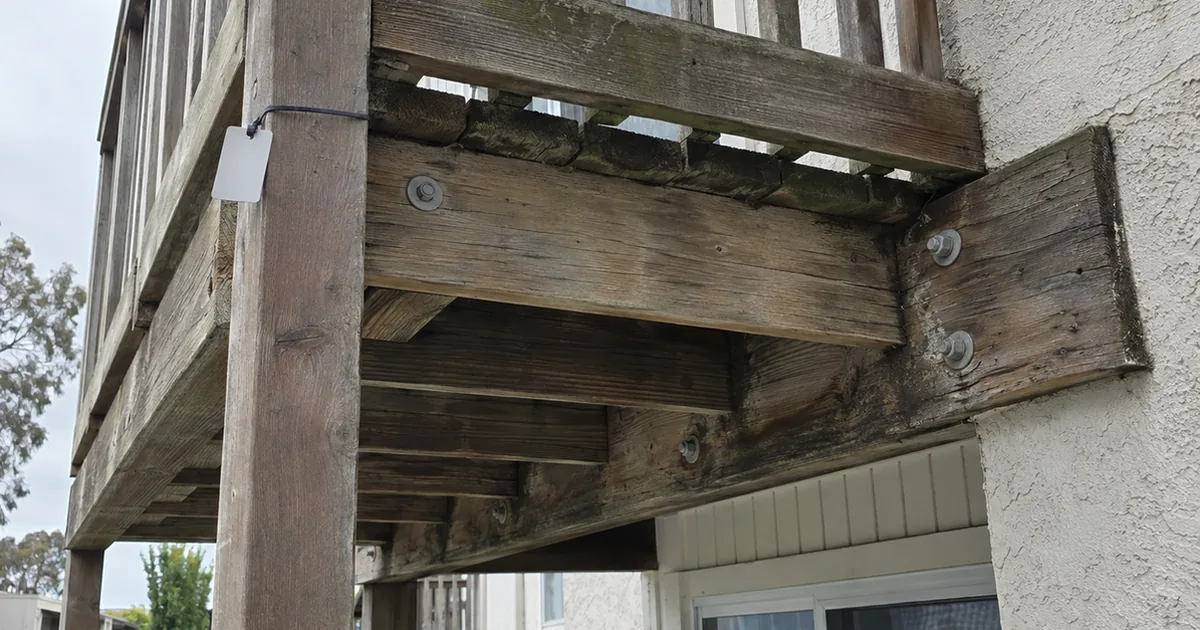
The new section 5 requires the inspector to inspect the visible and accessible framing including ledger boards, joists and beams, the supporting members, footings and piers, the walking surface, guards and handrails, and stairs and landings. It requires describing in writing the type and material of the framing, walking surface, and guards and handrails, and describing their condition.
It also draws the limits clearly, and agents should know these. The inspector is not required to determine the adequacy and load capacity of framing, footings and piers. The inspector is not required to enter the underside of a deck with less than 30 inches of vertical clearance and 30 inches of horizontal clearance between components and the ground, or with an access opening smaller than 18 inches by 24 inches. And the inspector is not required to inspect the underside of a deck or balcony that is more than 14 feet above grade level.
That last one is worth reading twice. On a steep lot, the decks highest off the ground, which is to say the ones where a failure would be most catastrophic, are precisely the ones a general inspection is not required to get underneath. We inspect many hillside homes where that geometry is the norm, in places like Sausalito and Tiburon, and the honest answer on a tall deck is often that the visible portion looked sound and that a structural evaluation from below is the only way to answer the question properly. Our guide to how a deck ledger connection actually fails explains why that joint carries so much of the risk.
California’s own balcony inspection requirements for multifamily buildings are a separate legal track, and we cover where those stand in our roundup of the California laws affecting inspections and agents.
The new section on tools, and why it explains price differences
This is the change that will matter most to buyers, and almost nobody outside the profession will read it.
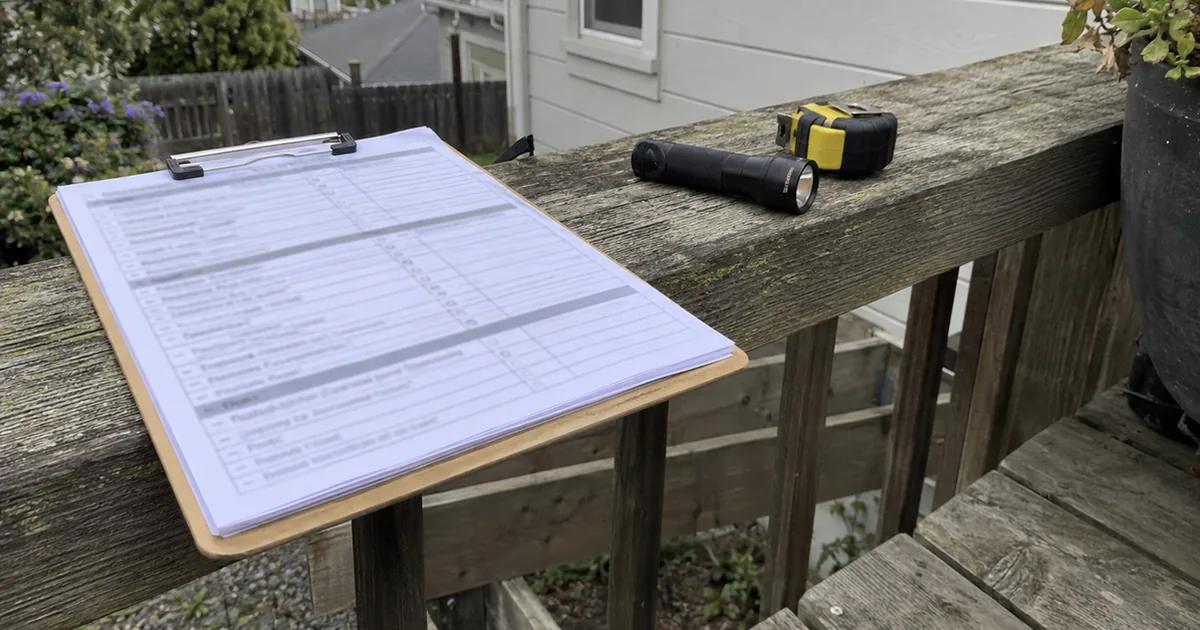
New section 16 says a home inspector may use reasonable and appropriate tools or equipment that, in the inspector’s professional judgment, are necessary to adequately perform a home inspection. Then it says the inspector is not required to use specialized equipment, instruments or testing devices, and it gives a list: amp meters, pressure gauges, moisture meters, combustible gas or carbon monoxide detection equipment, thermal imaging equipment such as infrared cameras, environmental testing equipment, elevation determination devices, ladders capable of reaching surfaces over one story above ground surface, cameras used to inspect the interior of a drain or sewer line, and small unmanned aircraft systems.
Read that list again with a buyer’s eyes. A baseline conforming home inspection does not have to include an infrared scan. It does not have to include a sewer line camera. It does not have to include a moisture meter. It does not have to include a ladder tall enough to reach a second story roof edge.
That is the honest answer to why two inspection quotes on the same house can differ by hundreds of dollars and why the reports come back looking nothing alike. Neither inspector is necessarily doing anything wrong. They are delivering different scopes, and until now the standard did not spell out that these tools were optional as explicitly as section 16 now does.
We include infrared, drone imaging and a 3D tour in our standard package, which is a choice about scope rather than a requirement of any standard. Our page on what is included in an inspection sets out exactly what we bring, and we would say the same thing to a buyer using a different company: ask for the scope in writing, and do not assume a tool is included because you have seen it in someone’s marketing. Our guide to why infrared scanning finds what a visual inspection misses explains what that particular tool adds.
What a home inspection has always been, and still is
A limited visual examination. The revised standard’s definitions section says so directly: a home inspection is a limited visual non-invasive examination of the readily accessible systems and components of a residential building, performed for compensation, and performed without moving personal property, furniture, equipment, plants, soil, snow, ice or debris.
The definition of readily accessible does a lot of work in that sentence. It means visually observable and examinable without destructive measures, without risk to the inspector or to property, without requiring the inspector to move or damage any wall, floor, ceiling, window covering or finish treatment, without climbing over or straddling personal property, without disturbing landscaping, and without disassembly or special tools.
Practically: a panel with a bed pushed against it is not readily accessible. A crawlspace hatch with a chest freezer on top of it is not readily accessible. An attic with less than 30 inches of vertical and horizontal clearance, or a hatch smaller than 18 by 24 inches, is one the inspector is not required to enter. Those are not an inspector being lazy. They are the boundary of the discipline, and they are the reason a seller who clears access beforehand gets a materially better report.
The exclusions agents get surprised by
Every standard has a list of things it does not cover, and this is where transaction disputes actually come from. The general limitations and exclusions section is long, and a handful of items on it account for most of the surprise.
The inspector is not required to determine the age, life expectancy or remaining useful life of systems and components, their strength, adequacy, effectiveness or efficiency, the causes of any condition or deficiency, or the methods, materials and costs of corrections. Not required to determine compliance with past and present requirements, guidelines, codes, standards, regulations, laws, ordinances, installation and maintenance instructions or recall notices. Not required to determine the presence of wood destroying insects and organisms, or of mold, fungus, allergens, asbestos, radon or other suspected hazardous substances. Not required to determine soil conditions relating to seismic, geotechnical or hydrologic specialties, or the market value, marketability or advisability of purchasing the property.
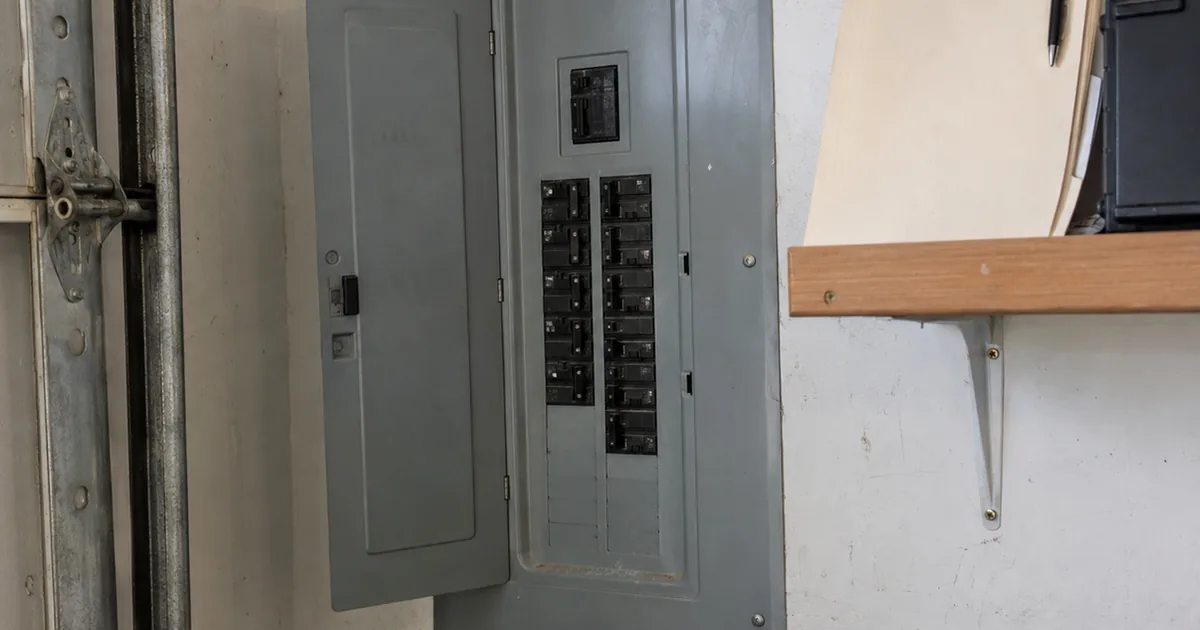
Specific systems are excluded too: wells and well pumps, septic and other sewage disposal systems, underground storage tanks, lawn irrigation, fire sprinkler systems, water quality, swimming pools and spas, photovoltaic and other renewable energy systems, and subsurface drainage systems. On the electrical side the inspector is not required to test smoke alarms and carbon monoxide detectors, determine their age and type, insert any tool or probe inside electrical panels, or dismantle any electrical device beyond removing the covers of load centers.
That last cluster catches people out constantly, so we say it plainly on every job: we describe whether alarms are present, not whether they work, and a buyer should replace them on move-in regardless of what the report says.
How the report is supposed to read
The standard specifies what a written report has to do, and this is the part worth measuring your inspector against.
The report describes the readily accessible, visually observable installed systems and components specified in the standard. It states the condition of those that, in the professional judgment of the inspector, are not functioning properly, are significantly deficient, are unsafe, or are near, at, or beyond the end of their normal useful lives. It states recommendations to repair or replace, or to obtain further evaluation and analysis by a qualified professional. It states the reasoning or explanation as to the nature of the significantly deficient and unsafe items. And it states which systems specified for inspection were present but not inspected, and why.
That fourth item is the one that separates a useful report from a checklist. A finding that says a component is deficient without explaining why is not meeting the standard. Neither is a report that quietly omits the attic without saying it was not entered and giving the reason. Our page on what our inspection report contains shows how we handle each of those, and our guide to reading a California inspection report walks through what the language actually means when you get one.
The standard also defines significantly deficient in a way that is worth knowing: a condition that significantly affects the value, habitability or safety of the dwelling or its occupants, but not including decorative, stylistic, cosmetic or aesthetic aspects. And it adds a sentence that prevents a common overreach, which is that the fact a system or component is near, at, or beyond the end of its normal useful life is not by itself significantly deficient. A twenty-two year old furnace that runs correctly is old, not defective, and a report that conflates the two is doing the buyer a disservice in the negotiation.
Where California law sits, because it is not the same thing
A standard of practice is not a statute, and in California the two are genuinely separate. This is the distinction most worth carrying away.
California does not license home inspectors. What it does have is Chapter 9.3 of Division 3 of the Business and Professions Code. Section 7195 defines a home inspection as a noninvasive physical examination, performed for a fee in connection with a transfer of real property, of the mechanical, electrical or plumbing systems or the structural and essential components of a residential dwelling, and defines the home inspection report as a written report prepared for a fee and issued after a home inspection that clearly describes and identifies the inspected systems, structures or components.
Section 7196 sets the standard of care, requiring the degree of care a reasonably prudent home inspector would exercise. Section 7197 prohibits an inspector from performing or offering to perform, for an additional fee, any repairs to a structure on which that inspector has prepared a report in the past 12 months, and prohibits offering compensation, inducement or reward to the property owner, the broker or the agent for the referral of business. Section 7199 gives a four year window from the date of the inspection to bring an action for breach of duty.
Two practical consequences. An agent asking an inspector to also do the repairs is asking for something the statute forbids within that 12 month window, and ASHI’s own Code of Ethics independently bars members from repairing systems they inspected for one year. And the referral prohibition is a statute, not an industry courtesy: an inspector offering to pay for a place on a preferred list is proposing something California law and the Code of Ethics both prohibit.
Because California sets a reasonably prudent standard rather than adopting a specific document, the standard an inspector subscribes to is a large part of what “reasonably prudent” ends up meaning. That is why it is worth knowing which one your inspector follows.
What agents should actually do with this
Four things, none of which require reading the full document.
Ask which standard the inspector works to and get it in writing on the agreement. Ask specifically which of the section 16 tools are included, because infrared, sewer camera, moisture meter and drone are all explicitly optional and are the ones buyers assume are automatic. Prepare the property for access, since readily accessible is the hinge the whole scope turns on, and a blocked panel or a loaded attic hatch converts a finding into a “not inspected” line. And set the expectation early that a general inspection does not price repairs, determine remaining life, rule on code compliance, or test for pests, mold or radon.
We work across Marin County, the wider Bay Area and the rest of the state, and the most common source of friction we see is not a missed defect. It is a scope the buyer never had explained to them.
Frequently asked questions
Is the 2026 ASHI Standard of Practice in effect now? No. Members approved it on January 8, 2026, but the document states the changes are not yet effective and that an implementation date will follow. Its printed effective date reads “tbd, 2026,” and the prior version remains current until then.
Does California require inspectors to follow the ASHI standard? No. California does not license home inspectors and does not adopt a specific standard. Business and Professions Code section 7196 requires the degree of care a reasonably prudent home inspector would exercise, and the standard an inspector subscribes to informs what that means.
Is my inspector required to walk on the roof? No. The standard states plainly that the inspector is not required to walk on roofs, and section 16 lists ladders reaching above one story as equipment an inspector is not required to use. Roof access depends on pitch, material, condition and safety.
Is an infrared scan or a sewer camera part of a normal inspection? Not under the standard. Both appear on the section 16 list of specialized equipment an inspector is not required to use. Some companies include them, some charge separately. Ask before you book.
Why does the report say a component was not inspected? Because the standard requires the inspector to state which systems were present but not inspected, and why. Blocked access, insufficient clearance, unsafe conditions and shut down systems are the usual reasons, and the reason belongs in the report.
The bottom line
The 2026 revision is not dramatic. It moves decks and balconies into their own section, merges heating and cooling into HVAC, gives garages and carports their own section, separates insulation from venting, expands the definitions, and adds a section on specialized tools. It is waiting on an implementation date.
What makes it worth an agent’s attention is the tools section, because it puts in writing something the industry has known and clients have not: infrared, sewer scoping, moisture metering and drone imaging are scope choices, not standard equipment. Combined with California’s own statutory framework, which sets a duty of care and a four year limitations window but no license and no mandated standard, the practical lesson is the same one it has always been. Read the scope before the inspection, not after the report.
If you want to see how we handle scope, our frequently asked questions covers the ground plainly, and our Novato and Mill Valley pages show how we adapt an inspection to the specific ground a house sits on.
Schedule an inspection · See what’s included · Sample report · FAQ · Same-day report · Pay-at-closing available
Related reading
- California’s Flipper Disclosure Law: What AB 968 Requires. The disclosure duty on a quick resale, and why a named contractor is not a permit.
- The 2025 California Building Standards Code. Why code compliance is fixed at permit date and is a different question from condition.
- How to Read a Home Inspection Report in California. What the findings mean once the report arrives.
- California’s Balcony Inspection Deadlines: SB 721 and SB 326. Two statutory inspections a general standard of practice does not and cannot satisfy.
- California Froze Residential Building Standards Until 2031. What changed about the standards themselves, and why it does not change an inspection’s scope.
This update is provided for general information and is not legal advice. For questions about how a standard of practice or California’s home inspector statutes apply to a specific transaction, consult a qualified real estate attorney or your broker’s compliance department. For inspection questions, our team is always glad to help.