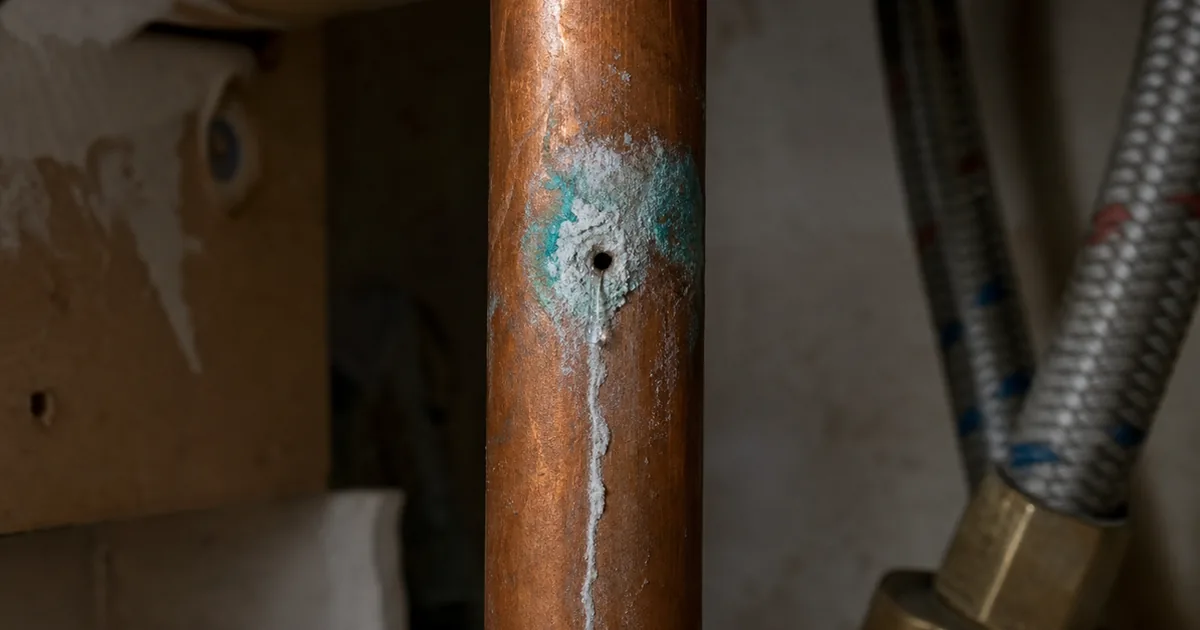
The stain under the kitchen sink was small, a faint blue-green crust on the copper line and a little dried mineral trail below it. The seller had wiped it down before showings, and to most eyes it looked like nothing. The inspector saw it for what it was: copper that had begun to fail from the inside. The home was a well-kept 1990s house in Tustin Ranch, the copper plumbing was original, and that one weeping spot under the sink was almost certainly not the only place the pipe was thinning.
We are keeping the address private and the details composite, because this is a quietly growing issue in Tustin’s 1980s and 1990s tracts and ones like them across California. Copper was the premium plumbing of its era and most of it performs for decades, but a meaningful share of it develops pinhole leaks as it ages, and the first one is rarely the last. The home looked perfect. The plumbing was on a clock nobody had been watching.
Here is how that one resolved, and what it should change about how you handle a copper-plumbed home.
Schedule a Tustin inspection · Same-day report · Pay-at-closing available
Why this matters for the agent
The 1980s and 1990s tracts that make up so much of Tustin Ranch and the surrounding area were plumbed in copper, and that copper is now twenty to forty years old, right in the window where pinhole leaks tend to begin. California is one of the regions where copper corrosion shows up most, and the failures are internal, which means the pipe can look fine on the outside while it is thinning from within.
The risk for the agent is that a copper pinhole problem is both easy to underestimate and potentially whole-house. A single pinhole is a cheap repair, so it is tempting to treat it as a one-off. But pinhole leaks are usually a symptom of the water chemistry and the pipe interacting over decades, which means where there is one, there are often more coming. A buyer who treats the first leak as the whole problem can face a cascade of them, and eventually a repipe, after closing. A buyer who understands what the first leak signals can plan and negotiate. The agent who knows the difference protects the deal and the client.
What a copper pinhole leak actually is
A pinhole leak is exactly what it sounds like: a tiny hole that develops in an otherwise solid copper pipe, weeping or spraying water. What makes it different from a fitting leak or a nail through a pipe is where it comes from. It is the result of pitting corrosion, a process that attacks the copper from the inside, etching small craters into the pipe wall until one eats all the way through.
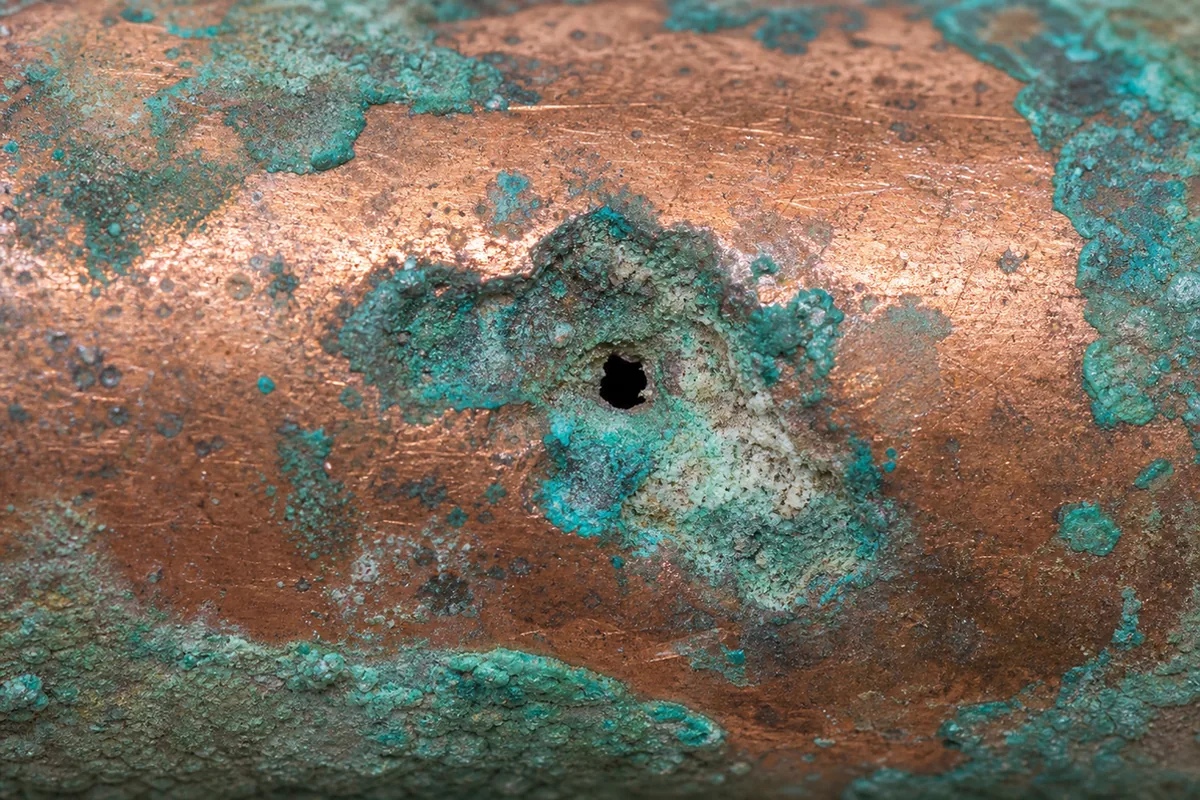
The drivers are largely about water and chemistry. Disinfectants like chloramine, certain mineral and pH conditions, water velocity, and in some cases microbial activity all contribute to copper pitting, which is why the problem clusters in certain regions and water systems rather than appearing everywhere. The key point for a buyer is that pitting is a condition of the whole plumbing system, not a defect in one spot, so the pipe tends to fail in more than one place over time once it starts.
Why it fails (the part most agents skip)
The thing that catches people is that copper has a reputation for lasting forever, so a leak in copper reads as a fluke rather than a pattern. The opposite is often true. By the time a pinhole weeps through to the outside, the pipe has been corroding internally for a long time, and the same conditions that produced that hole have been working on the rest of the system.
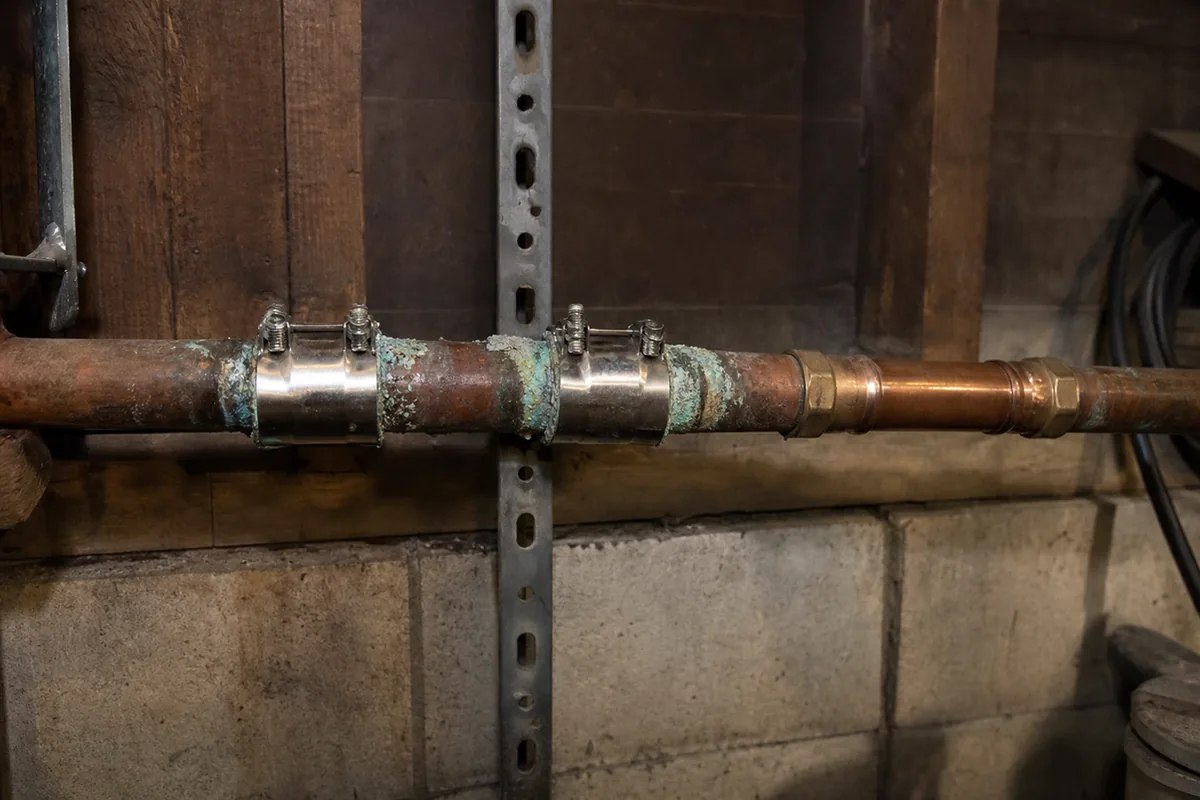
The failure is also hidden. Most of the plumbing runs inside walls, under slabs, and through ceilings, so an inside-out corrosion problem gives very little warning until a pinhole appears, often as a stain, a spot of corrosion, or a small drip at an exposed section like under a sink or at the water heater. A leak inside a wall or above a ceiling can run for a while before it shows, and a slow one feeds mold and damage. That is why the visible signs, the blue-green corrosion, the mineral trails, the patched sections, matter so much: they are the readable evidence of a system-wide condition.
The reason it can get expensive is that the answer to recurring pinholes is usually not another patch but a repipe, replacing the supply plumbing, today most often with PEX. That is a planned, whole-house project, which is a very different conversation than fixing one drip.
What agents should tell every buyer
Tell them that on a copper-plumbed home of this age, the plumbing deserves real attention, and that a single pinhole or corrosion spot is a signal, not a stand-alone repair. Framed that way, the buyer evaluates the system, not just the one stain.
Tell them what the real fix can be. A first pinhole can be repaired, but recurring pinholes point to a repipe, commonly in PEX, which is a defined whole-house project with a knowable cost. Knowing that up front keeps the buyer from assuming a five-dollar fix solves a system-wide condition.
Tell them where the inspection hands off. A home inspector documents the visible copper, the corrosion signs, any active leaks, and any prior repairs, and runs a thermal camera for hidden moisture; a plumber evaluates the system and scopes a repair or repipe. Setting that expectation keeps it grounded. For how related plumbing findings run through a deal, our slab-leak guide and our polybutylene guide cover the same flag-then-specialist pattern for other pipe problems.
Red flags during showings
You can spot a copper problem before the inspector confirms it.
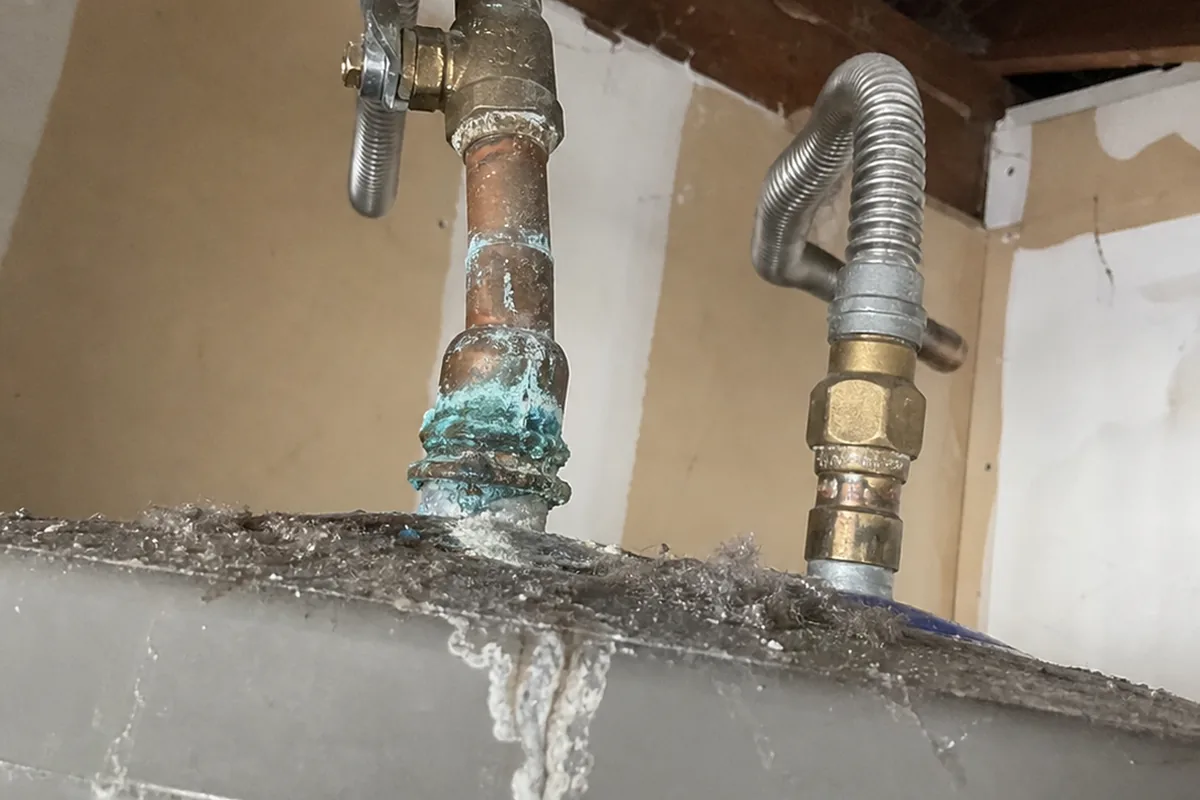
Look under sinks and at the water heater. Blue-green or white crusty corrosion on copper pipes and fittings, mineral trails running down a pipe, and any active weeping or dampness at an exposed line are the clearest tells.
Look for patches and clamps. A section of copper that has been replaced, a repair clamp on a pipe, or a fresh stub of new copper or PEX spliced into old copper means there has already been a leak, and where there is one, there may be more.
Check ceilings and walls for stains. A brown ring on a ceiling below a bathroom, a soft or patched spot of drywall, or a paint blister along a plumbing wall can mark a leak that came from inside the pipe.
Note the age and ask. A home plumbed in copper in the 1980s or 1990s is in the pinhole window; ask the listing side directly about any history of leaks, repairs, or a partial repipe, and treat a vague answer as a reason to look closely.
The negotiation playbook
When an inspection flags copper corrosion or a pinhole, there are four ways the deal tends to go.
The first path is the plumber’s evaluation. Because the inspection identifies the signs but a plumber determines whether it is an isolated repair or a system-wide condition, the right first move is often a short window for that evaluation. It is what tells everyone whether they are negotiating one fix or a repipe.
The second path is the repair-and-monitor. If the plumber judges it isolated, a targeted repair with the understanding that the system is aging can be enough, with the buyer going in informed.
The third path is the repipe credit. When the evidence points to recurring pinholes, a credit or seller-funded repipe, commonly in PEX, sized to the plumber’s scope, addresses the whole system rather than chasing leaks one at a time.
The fourth path is proceeding with eyes open. A buyer who understands the home is on aging copper may simply plan a repipe as a near-term project and price accordingly. That is a sound choice when it is informed, which is the entire reason to catch the signs during the inspection.
How the inspection actually catches it
A real inspection of a copper-plumbed home reads the plumbing as a system. We document the visible copper at sinks, the water heater, and any accessible runs, and we look specifically for the blue-green pitting corrosion, mineral trails, active weeping, and prior patches and clamps that signal an inside-out problem. We check ceilings and walls for the stains a hidden leak leaves, and we run a thermal camera to find moisture behind finishes that the eye misses, as our infrared scanning guide explains. Then we flag clearly when the evidence suggests more than an isolated leak and a plumber should evaluate the system for a repair or repipe, so the question gets answered before closing rather than one pinhole at a time after. See what every inspection includes.
Quick FAQ for agents
Isn’t copper supposed to last forever? Copper is durable, but a meaningful share develops pinhole leaks from internal pitting corrosion as it ages, and California is a region where this shows up. Copper from the 1980s-90s is now in that window.
Is one pinhole a big deal? The repair itself is small, but a pinhole is usually a symptom of a system-wide condition, so where there is one, more often follow. That is why a plumber should evaluate the whole system, not just the one spot.
What is the real fix? An isolated leak can be repaired, but recurring pinholes point to a repipe, most often in PEX today. A plumber scopes it; it is a defined whole-house project, not an open-ended fear.
Can the inspection find leaks inside walls? We use thermal imaging and look for stains to find evidence of hidden moisture, and we flag it for a plumber. We cannot see inside every wall, which is why the visible corrosion signs and the system’s age matter so much.
How long does it take to inspect? The plumbing review is part of a normal two-to-four-hour inspection. The report documents the corrosion signs and any leaks so the buyer has a clear picture.
The honest summary for agents
Copper earned its good reputation, which is exactly why a leak in it gets waved off as a fluke when it is often the first visible sign of a system-wide condition. In Tustin’s 1980s and 1990s tracts, that copper is now old enough that pinhole leaks are showing up, and the first one is rarely the last. Your value as the agent is reading a corrosion stain or a single pinhole as a signal worth a plumber’s evaluation, not a five-dollar fix, so the buyer understands whether they are buying a small repair or a future repipe. That is what turned a wiped-down stain under a sink into a real plumbing evaluation and a buyer who made a clear-eyed decision instead of chasing leaks after closing.
Related reading
- Backflow Prevention and Cross-Connection in Moreno Valley. A different plumbing failure mechanism, cross-connection risk rather than corrosion, useful context on how water chemistry and connection points each shape different findings.
- Aliso Viejo Shower Pan and Tile-Leak Guide. Another plumbing leak that hides behind an intact surface until it marks a ceiling.
- Foggy Dual-Pane Window Seal Failure in Costa Mesa: An Agent’s Guide: the other quiet, age-driven cost hiding in the same Orange County tracts.
- What a Thermal Camera Caught Under a Tuscany Hills Slab: how a hidden water leak is found and handed to a specialist, the same flag-then-plumber pattern.
- Polybutylene Piping in Chula Vista: An Agent’s Guide: another era’s supply-line material that fails system-wide and points to a repipe.
- Why Infrared Scanning Matters in California Homes: how thermal imaging finds the moisture a corroding pipe leaves behind a wall.
- Water Heater Safety in Thousand Oaks: another plumbing appliance with its own code-driven failure points, from the seismic strap to the relief-valve discharge line.
- Porter Ranch Water Pressure and Regulator Guide: the system-pressure side of plumbing failure, the force that shortens the life of a copper line and everything else in the house.
See what every inspection includes, how to read your inspection report, and our inspection FAQ. For city-specific pages, start with Tustin, Orange, and Costa Mesa.
If you have a copper-plumbed Tustin home in escrow, we can read the plumbing for the signs of pinhole corrosion and tell you clearly when it is time to bring in a plumber.
Schedule a Tustin Inspection → · Call 1-888-88-INSP-9
- Galvanic Corrosion at Dissimilar Metal Pipe Joints in Hermosa Beach. The two-metal version of pipe corrosion: a bimetallic junction that restricts flow at the fitting, rather than pitting from within a single copper run.