We inspected a home in the Victoria area of Rancho Cucamonga earlier this year. Clean two-story from the early 1990s, well kept, with a buyer who already had plans: move a wall, run new plumbing for an island, and bolt down some heavy garage equipment. Both agents were talking about the kitchen layout. Nobody had said that the house sits on a post-tension slab, which changes what you can and cannot do to that floor.
Then we looked at the slab and the garage.
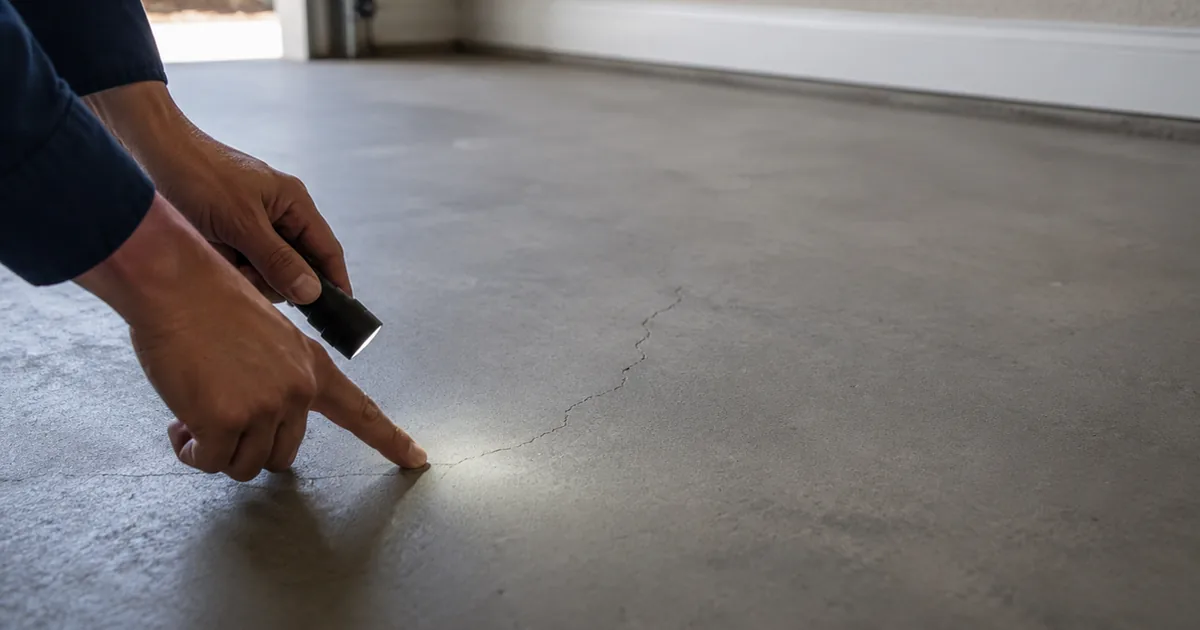
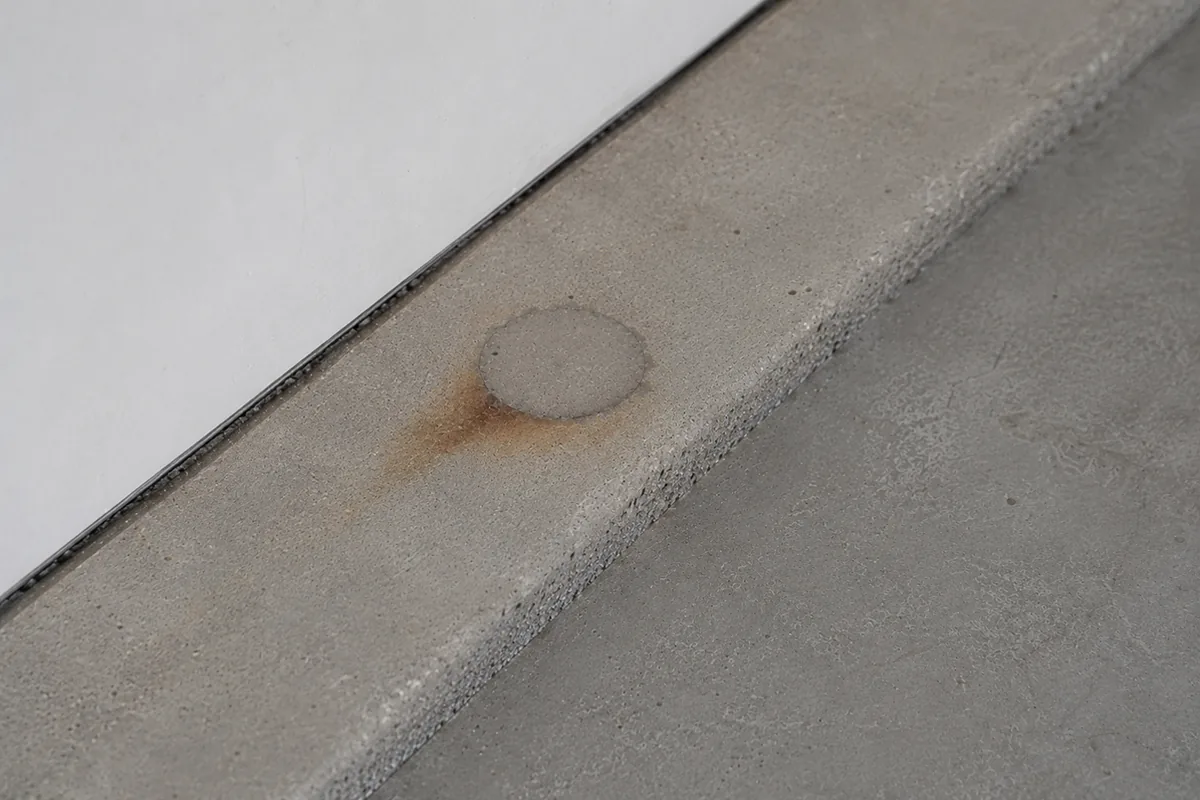
The foundation was a post-tension slab, the kind reinforced with tensioned steel cables run through the concrete, common on the newer tracts here that sit on expansive soil. Cured into the garage was the warning that you are not supposed to cut, core, or drill into the floor without locating the cables first. There was a hairline crack tracking across the slab, and at the slab edge a couple of the cable-anchor pockets were poorly patched and lightly stained. None of it meant the foundation was failing. All of it meant the buyer’s remodel plans, and the way the home would age, needed to account for the slab they were actually buying.
The buyer was the first person in the transaction to understand that the floor was an engineered structure with its own rules, not a blank slab to cut into.
Schedule a Rancho Cucamonga inspection · Same-day report · Pay-at-closing available
Here is how that one resolved. We documented the post-tension stamp, the slab cracking, and the anchor-pocket condition on the same-day report, with photos, and explained plainly what a post-tension slab is, why the cables make cutting it a job for a professional with the right scanning, and that the cracking looked like normal expansive-soil movement rather than tendon failure. We recommended a structural engineer review the cracking and any plan to alter the slab. The buyer’s agent ordered that review, which confirmed the slab was sound and gave the remodel a safe path with the cables located first. The deal closed and the buyer kept their plans. The point is not that a post-tension slab is a problem. It is that it is a specific kind of foundation with specific rules, and a buyer in Rancho Cucamonga should know which one they are getting during escrow.
Why this matters for the agent
A post-tension slab is not a defect. It is a normal, often preferable foundation for expansive soil. It matters because most buyers have never heard of one, and what they do not know shapes both their renovation plans and how they read a crack.
Three things tend to be on the line. First, the renovation reality. A buyer who plans to cut the slab for plumbing, anchor heavy equipment, or add a feature has to locate the cables first, which changes the scope and cost of the work and is dangerous to skip. Second, the cost of a real failure. A healthy post-tension slab is fine, but tendon corrosion or a damaged cable is a serious, five-figure structural repair, so telling normal movement from a real problem matters. Third, the diligence gap. A buyer who does not know the home has a post-tension slab can either panic at an ordinary hairline crack or, worse, let a contractor saw into the floor and hit a tensioned cable. Either way, knowing changes the decision.
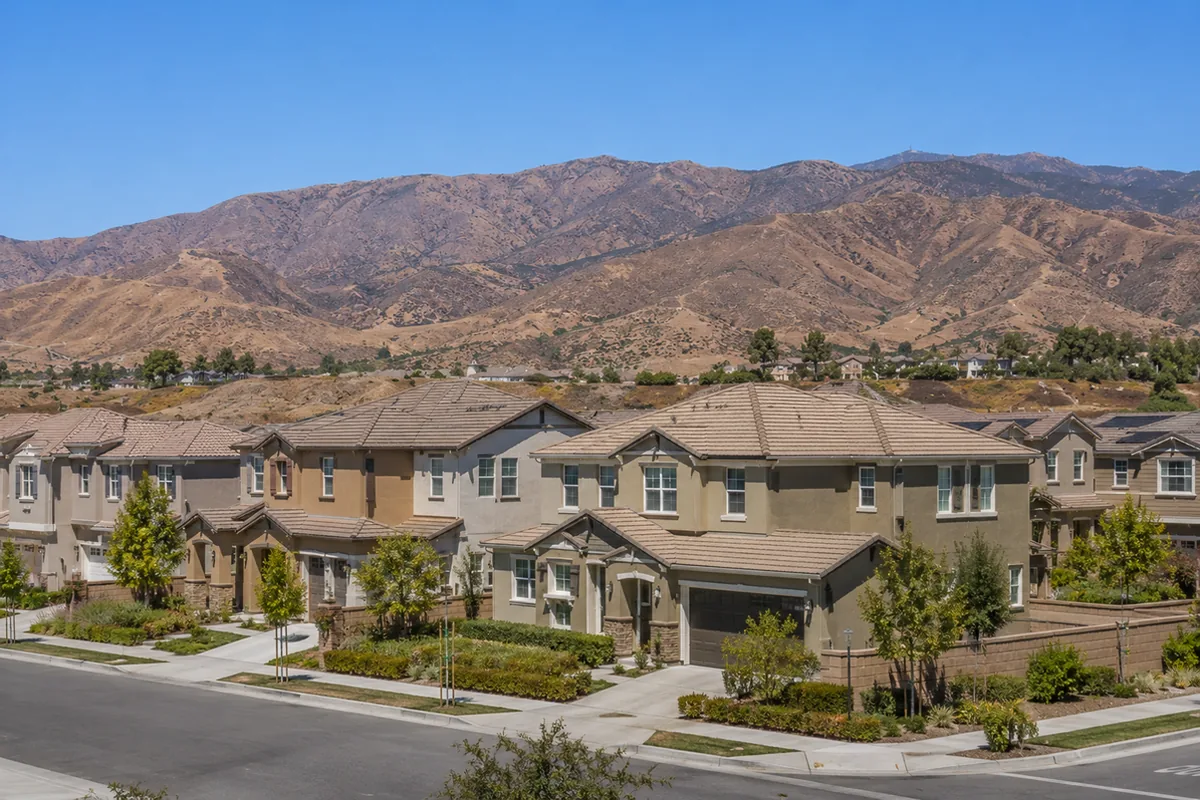
If you work Rancho Cucamonga, this comes up constantly. So much of the city is 1980s-to-2000s master-planned tract stock on expansive soil, exactly where post-tension slabs are common. Agents who can explain the foundation come out ahead.
What a post-tension slab actually is
A post-tension slab is a concrete foundation strengthened with steel cables that are tensioned after the concrete cures, so the slab is squeezed together and can ride expansive soil without cracking apart.
When the home is built, steel strands called tendons are laid in a grid inside the slab forms, sheathed so they can move. After the concrete sets, those tendons are pulled tight with a hydraulic jack and anchored at the slab edges, putting the whole slab into compression. That compression is what lets a relatively thin slab span soft spots and resist the swelling and shrinking of expansive soil, which is why California builders favor them where the soil moves. Two features matter for a buyer. First, the slab is usually marked with a cured-in warning that it must not be cut, cored, or drilled without locating the cables, because a tensioned cable carries enormous stored force. Second, the tendons are anchored in small pockets at the slab edge that are patched with grout, and those anchors must stay protected from moisture, because corrosion at the anchor is the most common way these systems fail.
The reason this matters in Rancho Cucamonga specifically is the combination of newer tracts and expansive soil. The Alta Loma, Etiwanda, Victoria, and Terra Vista stock went up in exactly the era and on exactly the soil where post-tension slabs are standard, so a large share of the city’s homes have one.

Why post-tension slabs fail (the part most agents skip)
A post-tension slab almost never fails because the design is bad. It fails because moisture reaches a cable, because the soil overwhelms it, or because someone cut into it.
The most common real failure is corrosion at the tendon anchors. If the anchor pockets at the slab edge were patched poorly or left exposed, water gets to the end of the cable, rusts it, and the cable can lose tension or break, which shows up as cracking, a popping sound, or a section of slab that is no longer in compression. The second path is the soil: even a post-tension slab has limits, and severe expansive-soil movement, poor drainage that keeps the soil cycling wet and dry, or plumbing leaks under the slab can stress it into cracking. The third path is human, when a remodel, a plumber, or a homeowner saws or cores the floor without locating the cables and either hits a tensioned tendon or severs it. A clean hairline crack on a post-tension slab is often just normal curing or minor movement, but distinguishing that from a corroded or broken tendon is exactly where judgment matters.
None of this is obvious to an untrained eye. The slab looks like any other concrete floor, the cables are buried, and the difference between a cosmetic crack and a structural one is not something a buyer should guess at on a showing.
What agents should tell every buyer on a newer Rancho Cucamonga home
A short list buyers writing offers on Rancho Cucamonga’s newer tracts should hear from you before they go into escrow.
- Many newer homes here sit on a post-tension slab. It is a good foundation for this soil, but it has rules, so find out whether the home has one.
- You cannot cut, core, or drill a post-tension slab for plumbing, anchors, or a remodel without locating the cables first. Plan and budget for that before you buy with renovation in mind.
- A hairline crack on a post-tension slab is often normal. Telling normal movement from a real problem is a job for the inspection and, when needed, a structural engineer.
- The cable anchors at the slab edge must stay protected from moisture, because anchor corrosion is the main way these slabs fail. We look at them.
- Keep drainage and soil moisture stable around the home. Expansive soil that keeps cycling wet and dry is what stresses any slab here over time.
If you want a one-page version of this list to text to your buyers in the pre-offer window, ask us and we will send it.
Red flags during showings (no special tools required)
You do not need equipment to flag a post-tension or soil concern at a showing. Add these to your walk-through on any newer Rancho Cucamonga property.
- A cured-in warning marking in the garage slab or on the garage wall indicating a post-tension foundation, which tells you the no-cut rule applies.
- Cracks in the slab that are wide, offset, or actively lengthening, as opposed to fine hairline lines.
- Floors that feel out of level, or doors and windows that have started to stick and rack.
- Staining, spalling, or popped grout at the cable-anchor pockets along the slab edge, often visible in the garage.
- Drainage that runs toward the house, downspouts dumping at the foundation, or irrigation soaking the soil right against the slab.
- A remodel or added plumbing where you cannot tell whether the slab was cut, which is worth asking about directly.
None of these prove a slab is failing. All of them are reasons to have the foundation read carefully and to bring in a structural engineer when the cracking or the anchors look wrong.
Schedule a Rancho Cucamonga inspection
The negotiation playbook when a post-tension slab surfaces in escrow
There are four paths most of these deals end up on. Knowing them in advance helps you steer.
Most of the time, there is nothing to negotiate, because the slab is sound. The right move is education: confirm the foundation type, document its condition, and make sure the buyer understands the no-cut rule and the maintenance so they go in informed rather than alarmed.
Seller credits the buyer when there is a real finding, such as corroded anchors or cracking an engineer attributes to a tendon or soil problem. Size the credit to a structural engineer’s scope and a licensed contractor’s bid, since post-tension repair is specialized work. The written bid anchors the number.
Buyer walks under the inspection contingency happens when an engineer turns visible cracking into a tendon or soil repair the buyer did not plan for. The earnest money is protected under the contingency. Your job as the buyer’s agent is to make sure they know walking is an option and what triggers it.
Deal closes with informed plans is the common outcome for a buyer who wants to remodel. Document that they understand the slab cannot be cut without locating the cables, and help them build cable-locating and any engineering into the renovation budget and timeline so it is planned rather than discovered mid-project.
How the inspection actually catches it
A quick inspection that just notes “concrete slab, no visible issues” misses the point, because the foundation type and the condition of the cables and anchors are what a Rancho Cucamonga buyer needs. Catching it takes knowing what to look for.
We identify the foundation as a post-tension slab from the cured-in markings and the anchor pockets, document the slab cracking and any out-of-level or racking clues, and look at the cable-anchor pockets at the slab edge for the staining and spalling that point to corrosion. We trace the exterior grading and drainage that drive expansive-soil movement, and we run thermal imaging to surface the signature of a plumbing leak under the slab, which is one of the things that stresses it. Then we explain plainly what the buyer is buying, flag the no-cut rule for their remodel, and tell them when cracking or anchor condition deserves a structural engineer, because a general inspection documents the foundation but the engineer evaluates the tendons and the soil.
Combined, the foundation identification, the crack and anchor read, the drainage trace, and the thermal scan turn an unfamiliar foundation into a documented, understood part of the purchase. The expansive-soil movement behind much of this is covered in our Menifee expansive clay guide, and the way thermal imaging catches under-slab moisture is in our piece on why infrared scanning matters.
Quick FAQ for buyers and agents
Is a post-tension slab a bad thing? No. It is often the better foundation for expansive soil, which is why California builders use them. It simply has rules, like the no-cut requirement, and specific failure modes a buyer should understand.
Can I remodel a home with a post-tension slab? Yes, but you cannot cut, core, or drill the slab without locating the cables first, usually with ground-penetrating radar, because a tensioned cable carries enormous force. Plan and budget for that step before buying with a remodel in mind.
Is a crack in a post-tension slab a problem? Often not. Fine hairline cracks are common from curing and minor movement. Wide, offset, or lengthening cracks, or cracking with anchor corrosion, are different and deserve a structural engineer. We help tell them apart.
How do post-tension slabs fail? Most often through corrosion at the cable anchors when moisture reaches them, and also through severe expansive-soil movement, under-slab plumbing leaks, or someone cutting into the slab and damaging a cable.
Does this come up much in Rancho Cucamonga specifically? Yes. The city’s 1980s-to-2000s master-planned tracts on expansive soil are exactly where post-tension slabs are common, so a large share of the homes here have one.
The honest summary for agents
If you work Rancho Cucamonga and you write offers on its newer tracts, you are selling homes on engineered foundations most buyers have never heard of. The post-tension slabs identified and explained during the inspection are simply understood. The ones discovered when a contractor saws into the floor, or when a buyer panics at an ordinary crack, are avoidable problems. Your buyer is far better served by knowing.
The inspection that catches it is not the cheapest one on Yelp. It is the one that identifies the foundation, reads the slab and the anchors, checks the drainage, runs thermal imaging for under-slab moisture, and explains plainly what the buyer is buying, with a same-day report so you have the information in hand before the contingency clock runs out.
Schedule a Rancho Cucamonga inspection or see our full inspection scope before you book. Common questions are answered in the FAQ. For the expansive-soil movement behind it, read our Menifee expansive clay guide, and see why infrared scanning matters on slab homes.