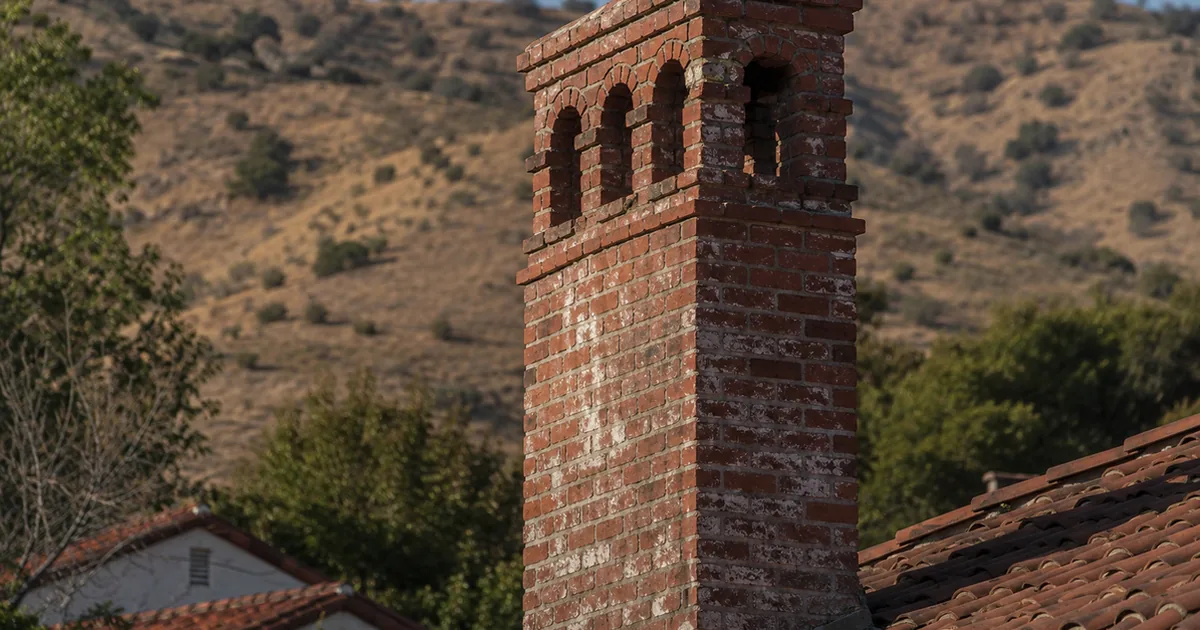
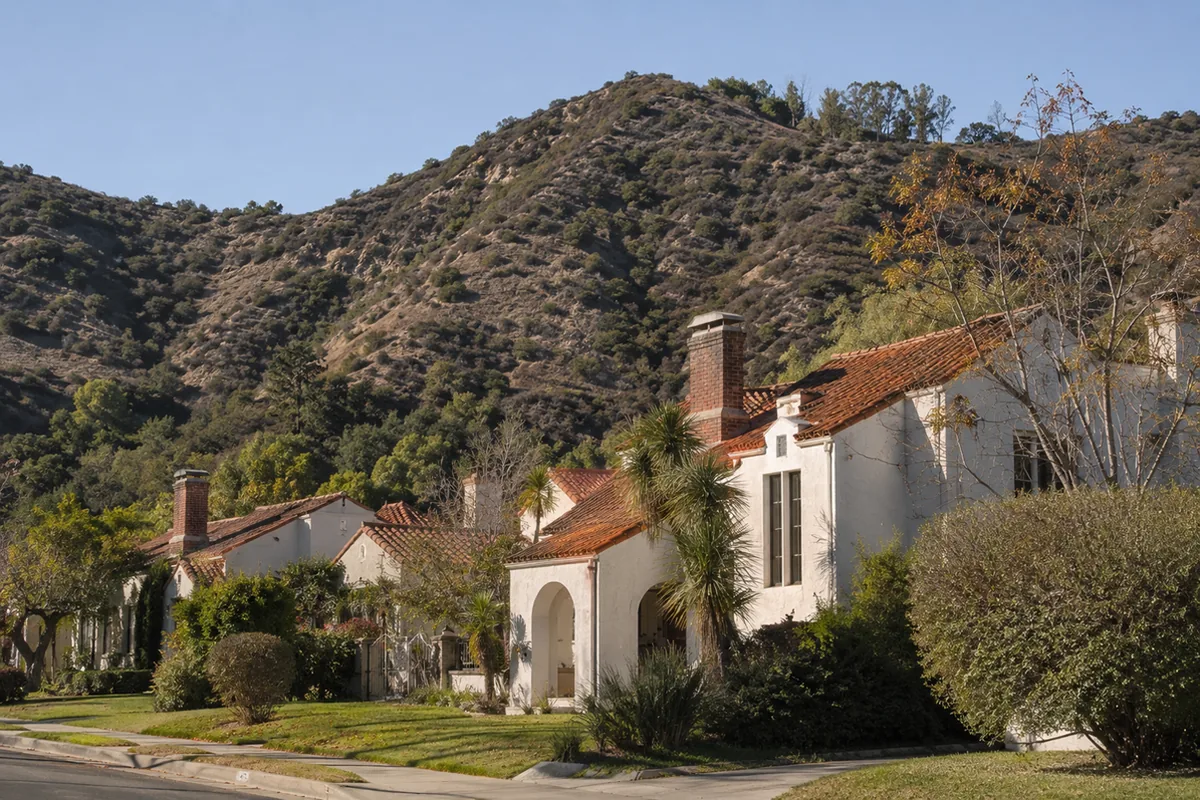
We inspected a 1928 Spanish home in the Verdugo Woodlands area of Glendale earlier this year. Beautiful original house against the foothills, with a tall brick chimney that anchored the whole front elevation. Both agents loved the character. Nobody had looked closely at the chimney, which on a home that age, between two faults, is the first thing we want to see.
Then we got up to it with the drone and walked the attic and roofline.
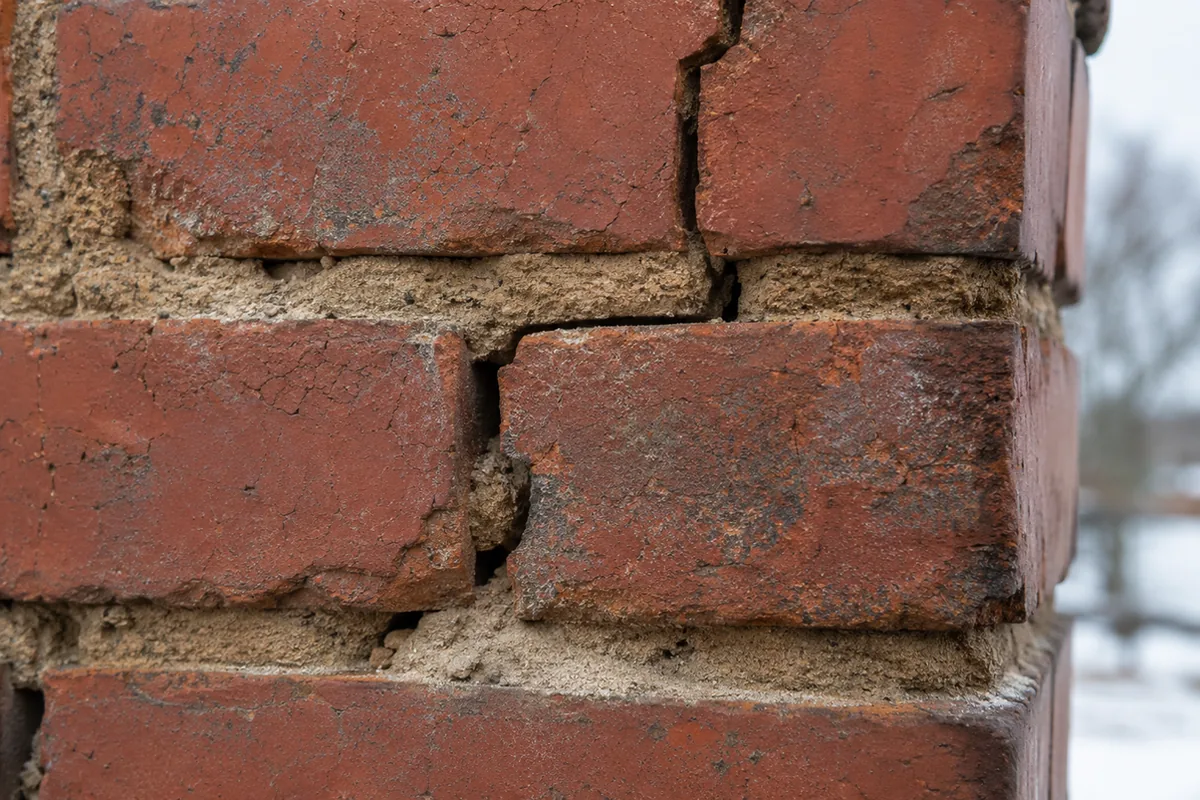
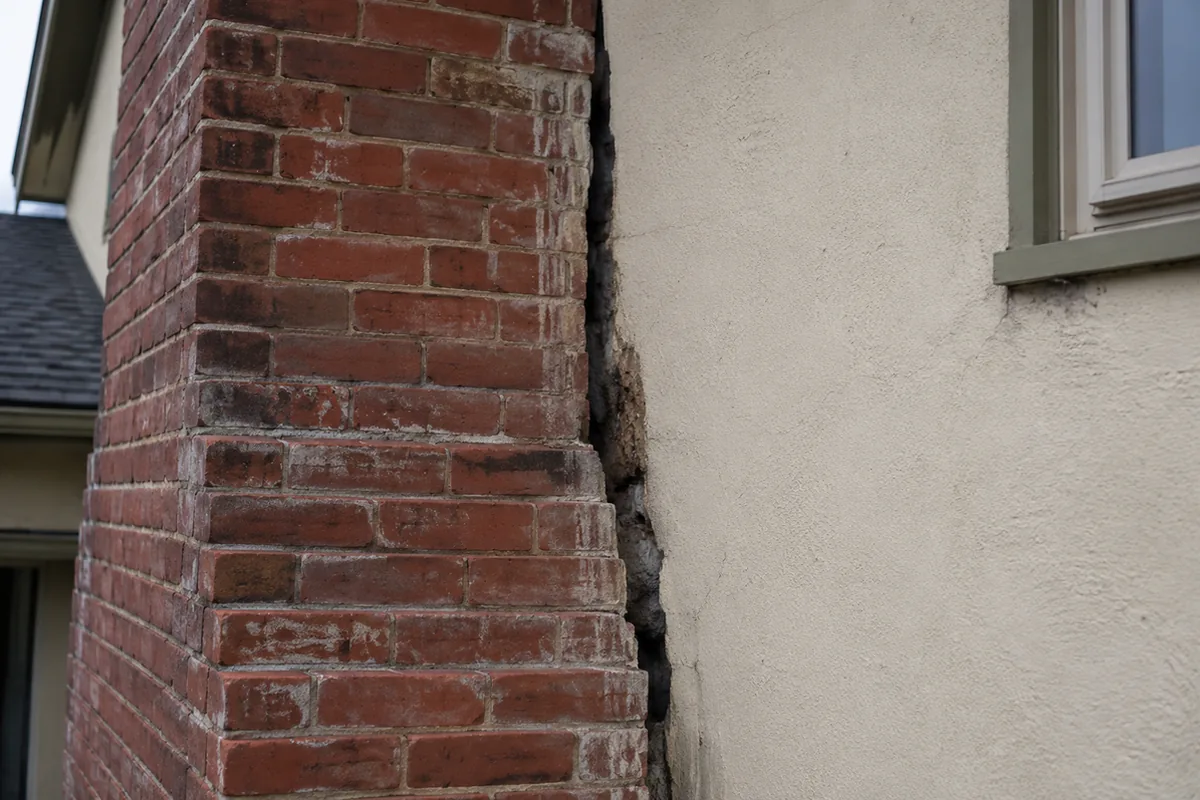
The chimney was unreinforced brick, original to the house. The mortar between the bricks was soft and crumbling, you could rake it with a fingernail. There was a stair-step crack running down one face, the crown was cracked, and at the roofline the chimney had begun to separate from the house, with a gap opening where it should be tied in. None of that is unusual on a 1920s chimney. All of it is exactly what topples, onto the roof, into the house, or onto whoever is standing below, when the ground moves.
The buyer was the first person in the transaction to understand that the home’s most charming feature was also its biggest earthquake liability.
Schedule a Glendale inspection · Same-day report · Pay-at-closing available
Here is how that one resolved. We documented the crumbling mortar, the stair-step crack, the cracked crown, and the separation at the roofline on the same-day report, with drone photos, and explained plainly that an unreinforced masonry chimney like this is a known earthquake hazard and that a structural engineer or qualified chimney specialist should evaluate it before the buyer relied on it. The buyer’s agent ordered that evaluation, which recommended removing the masonry above the roofline and rebuilding light, with a metal flue. They went back to the seller with a bid and closed with a credit for the work. The deal still traded. The point is not that a masonry chimney is a dealbreaker. It is that in Glendale’s older foothill homes the chimney is a structural and safety item, and the time to learn its condition is during escrow.
Why this matters for the agent
A masonry chimney reads as charm, not structure. But on an older home in earthquake country it is one of the heaviest, most brittle, and least tied-down parts of the house, and when it fails it can fail catastrophically.
Three things tend to be on the line. First, the safety. An unreinforced masonry chimney can topple onto the roof, through the ceiling into a bedroom, or onto a person standing outside, which is a life-safety issue, not a cosmetic one. Second, the cost. Repairing an old unreinforced chimney to modern seismic standards is often impractical, so the real fix is usually partial or full removal and a lightweight rebuild, which runs into four and sometimes five figures. Third, the diligence gap. A quick walk-through never gets up to the chimney or into the attic, so the buyer rarely learns the condition until an inspector looks, or until a quake makes the point.
If you work Glendale, this is a large part of your inventory. The historic and foothill neighborhoods are full of pre-1960 homes with original masonry chimneys, and the city sits between the Sierra Madre and Verdugo faults. Agents who treat the chimney as its own structural line item come out ahead.
What an unreinforced masonry chimney actually is
A masonry chimney is a tall, heavy stack of brick or stone held together with mortar. “Unreinforced” means there is no steel rebar running through it to hold it together when it is shaken, which describes most chimneys built before modern seismic codes.
That construction is the problem. Brick and mortar are strong in compression but weak in tension and bending, exactly the forces an earthquake applies to a tall, top-heavy stack. The mortar, especially the soft lime mortar in pre-1930s homes, degrades over the decades until it barely holds the bricks. The chimney is often poorly tied to the house framing, so it moves on its own in a quake. The result, documented after the 1994 Northridge earthquake, is that unreinforced masonry chimneys collapsed in a large majority of inspected homes in the hardest-shaking areas. Because retrofitting an old chimney to perform like new is generally not feasible, the accepted fix is usually to remove the masonry, at least above the roofline, and rebuild with a light metal flue and framed chase, or to install a sealed insert.
The reason this matters in Glendale specifically is the combination. The Sierra Madre thrust fault runs along the foothills and the Verdugo fault bounds the range to the south, and a great deal of the city’s housing is the pre-1960 stock that carries these chimneys.
Why these chimneys fail (the part most agents skip)
An unreinforced masonry chimney rarely fails because of one dramatic flaw. It fails because age and a poor connection to the house leave it ready to come apart the moment it is shaken.
Three conditions stack up. First, the mortar. Decades of weather turn old mortar soft and sandy, so the joints that hold the bricks together crumble, the test is whether you can scratch it out with a screwdriver or a fingernail. Second, the existing cracks and separation. A chimney that already shows stair-step cracking, a cracked crown, or a gap pulling away from the house at the roofline has lost much of what little integrity it had, and water getting into those cracks accelerates the decay and can damage the flue liner, which is its own fire and carbon-monoxide concern. Third, the connection. Many old chimneys are not strapped or anchored to the framing, so in a quake the heavy stack and the lighter wood house move separately and the chimney shears off. None of this is loud on a calm day. The chimney stands there looking like character until the ground moves, and then the same features that made it charming make it dangerous.
This is the part agents and buyers most often miss, because the chimney is hard to see well from the ground and nobody thinks to question it.
What agents should tell every buyer on an older Glendale home
A short list buyers writing offers on older Glendale homes should hear from you before they go into escrow.
- On a pre-1960 home, the masonry chimney is a structural and life-safety item, not just a feature. We look at it closely on every inspection.
- Crumbling mortar, stair-step cracks, a cracked crown, or separation from the house are signs the chimney is vulnerable in a quake.
- Repairing an old unreinforced chimney to modern standards is usually not practical. The real fix is often removal above the roofline and a lightweight rebuild, so budget accordingly.
- When the chimney shows real damage, plan for a structural engineer or qualified chimney specialist to evaluate it. The inspection flags the condition; the specialist scopes the fix.
- A damaged flue is also a fire and carbon-monoxide concern, so a chimney problem is not only seismic.
If you want a one-page version of this list to text to your buyers in the pre-offer window, ask us and we will send it.
Red flags during showings (no special tools required)
You do not need equipment to flag a chimney concern at a showing. Add these to your walk-through on any older Glendale property.
- A tall unreinforced brick or stone chimney on a home built before the 1960s.
- Crumbling, sandy, or missing mortar between the bricks, which you can sometimes see from the ground.
- Stair-step or vertical cracking down a chimney face, or a cracked or crumbling crown at the top.
- A visible gap where the chimney meets the house wall or the roofline, a sign it is separating.
- Brick debris in the fireplace, on the roof, or in the yard at the base of the chimney.
- Interior cracks in the wall or ceiling around the fireplace, or a chimney that leans.
None of these prove the chimney will fail. All of them are reasons to look closely and to bring in a structural or chimney specialist when damage shows.
Schedule a Glendale inspection
The negotiation playbook when a chimney surfaces in escrow
There are four paths most of these deals end up on. Knowing them in advance helps you steer.
Seller repairs or rebuilds before closing is clean when the seller will engage, and a chimney rebuild above the roofline is a defined project. Insist the work is permitted, that it follows a specialist’s scope rather than a cosmetic mortar patch, and that a re-inspection confirms it before closing.
Seller credits the buyer to handle it after closing is the most common outcome. Size the credit to a real bid from a licensed contractor or chimney specialist, ideally informed by a structural engineer, covering removal and a lightweight rebuild rather than a surface repair. The written bid anchors the number, and a full rebuild can be a large one, so get it before the credit is finalized.
Buyer walks under the inspection contingency happens when an engineer turns a charming chimney into a removal-and-rebuild project the buyer did not plan for. The earnest money is protected under the contingency. Your job as the buyer’s agent is to make sure they know walking is an option and what triggers it.
Deal closes with no further action is the riskiest, because the buyer inherits a chimney that stays vulnerable until the next significant quake. If the buyer wants the home anyway, document their informed decision in writing and help them plan the chimney work as an early safety project. An escrow hold-back for the work is a clean structure when the seller will fund it but cannot manage a permitted rebuild inside escrow.
How the inspection actually catches it
A quick inspection from the curb will miss a failing chimney, because the evidence is at the mortar joints, the crown, the roofline connection, and inside the attic and firebox. Catching it takes getting up to it.
We document the chimney with drone imagery to read the crown, the upper courses, and the roofline connection safely, we check the mortar and the brick for cracking, crumbling, and separation, and we look at the firebox, damper, and visible flue from inside. We tie that to the rest of the seismic picture on an older home, the foundation bolting and cripple-wall bracing, and we run thermal imaging to catch moisture intrusion around the chimney that accelerates the decay. Then we tell the buyer plainly when the chimney shows damage that a structural engineer or qualified chimney specialist should evaluate, because a general inspection documents the condition but the specialist determines the fix.
Combined, the drone read, the mortar and crack check, the interior look, and the thermal scan turn a charming-but-risky chimney into a documented set of findings you can take into the negotiation. The broader seismic-readiness picture in fault country is covered in our Murrieta Elsinore Fault seismic guide, and the way thermal imaging surfaces hidden moisture is in our piece on why infrared scanning matters.
Quick FAQ for buyers and agents
Is an unreinforced masonry chimney really that dangerous? In an earthquake, yes. After the 1994 Northridge quake, unreinforced masonry chimneys collapsed in a large majority of inspected homes in the high-shaking zones, and they can fall onto the roof, into the house, or onto people outside.
Can the chimney just be repaired? Usually not to modern seismic standards in any practical way. The accepted fix is generally to remove the masonry, at least above the roofline, and rebuild light with a metal flue, or to install a sealed insert.
What does chimney work cost in Glendale? A removal-and-lightweight-rebuild generally runs in the four figures, and a larger or full rebuild can reach five. Get a specialist’s bid, ideally informed by a structural engineer, before the negotiation.
Does a home inspection cover the chimney? It covers the visible and accessible condition, the mortar, cracking, crown, roofline connection, and the firebox and visible flue, and it will flag a chimney that is failing. When there is real damage, the right next step is a structural engineer or qualified chimney specialist, and we say so.
Does this come up much in Glendale specifically? Yes. The historic and foothill neighborhoods are full of pre-1960 homes with original masonry chimneys, and the city sits between the Sierra Madre and Verdugo faults.
The honest summary for agents
If you work Glendale and you write offers on its older foothill homes, you are selling properties where the chimney is often the heaviest, most brittle, least anchored thing on the house, on ground framed by two faults. The chimneys caught during the inspection contingency are negotiations and planned safety projects. The ones caught when they come down in a quake are emergencies, and sometimes injuries. Your buyer is far better served by the first.
The inspection that finds it is not the cheapest one on Yelp. It is the one that gets up to the chimney with a drone, reads the mortar and the connection, checks the firebox and flue, runs thermal imaging for the moisture that speeds the decay, and tells the buyer plainly when an engineer needs to weigh in, with a same-day report so you have the proof in hand before the contingency clock runs out.
Schedule a Glendale inspection or see our full inspection scope before you book. Common questions are answered in the FAQ. For the broader seismic picture in fault country, read our Murrieta Elsinore Fault seismic guide, and see why infrared scanning matters on older homes.