The housing boom of the early 2000s, combined with large-scale rebuilding along the Gulf Coast after the 2005 hurricane season, created a short-term supply gap in the U.S. drywall market. To close that gap, builders and suppliers turned to overseas manufacturers. A portion of the product that arrived between 2001 and 2009, largely from China, later became the subject of government investigations, class-action litigation, and tens of thousands of property damage claims.
Industry estimates put the volume at roughly 250,000 tons of imported Chinese drywall over the period, used in the construction or renovation of something close to 100,000 homes. Most of those homes are concentrated in the American Southeast, with Florida accounting for the largest single share. The peak import years ran from 2004 through 2007. California saw lower prevalence, but affected shipments did reach the West Coast during the peak import years, and construction date remains the more reliable risk indicator than geography alone.
More than fifteen years on, properties built or remodeled in that window continue to surface during resale and insurance inspections with the characteristic indicators of defective drywall. For California real estate agents, first-time buyers, and sellers preparing for listing, understanding those indicators and the remediation process that follows is no longer an academic exercise. It remains a routine part of due diligence on any property built between 2001 and 2009.
What Is Chinese Drywall?
“Chinese drywall” has become industry shorthand for imported gypsum wallboard, manufactured primarily in the People’s Republic of China, that off-gasses reactive sulfur compounds under normal indoor conditions. The label is useful in practice but imprecise. Not all drywall produced in China during the relevant years was defective. Some domestic product from the same period had issues of its own. What distinguishes the problem batches is composition.
Chinese manufacturers commonly used unrefined fly ash, a residue of coal combustion, in the production of gypsum wallboard. Fly ash can contain strontium sulfide and related reactive sulfur compounds. Once installed in a conditioned interior, particularly in warm and humid climates, that sulfur content slowly off-gasses as hydrogen sulfide, carbon disulfide, and carbonyl sulfide. All three are corrosive. All three carry the faint rotten-egg odor that homeowners most often describe.
Federal investigations into the issue began in earnest in 2009, led jointly by the U.S. Consumer Product Safety Commission and the U.S. Department of Housing and Urban Development. Manufacturers later named in litigation or remediation protocols include Knauf Plasterboard Tianjin, Knauf Gips, and Taishan Gypsum. Additional product brand names associated with affected shipments include ProWall, Crescent City Gypsum, IMT, and Dragon Brand. The list is not exhaustive, and markings on individual sheets varied considerably in legibility and completeness.
Why It Is a Problem
Defective drywall causes damage on three fronts. The first is to occupant health, where the evidence remains partial but the reported pattern is consistent. The second is to copper, silver, and other reactive metals throughout the home, where the evidence is unambiguous. The third is to electrical and life-safety systems, which is the reason the issue is treated as more than a nuisance claim.
Health Effects
Occupants of affected homes commonly report sinus irritation, sore throats, persistent cough, wheezing, burning or watering eyes, headaches, rashes, and frequent nosebleeds. Symptoms often ease during periods away from the property and return on re-entry.
The scientific picture is messier than the anecdotal one. The Florida Department of Health, in its published comparative analyses, documented measurable chemical differences between Chinese and domestic drywall samples, with the Chinese product emitting detectable sulfur compounds under heat and humidity. Industry-sponsored testing from Lennar and Knauf reached less alarming conclusions. No federal agency has issued a formal finding of long-term health injury directly attributable to defective drywall. A homeowner experiencing persistent symptoms in a home that fits the risk profile described below should nonetheless consult a physician and treat the possibility seriously.
Property Damage
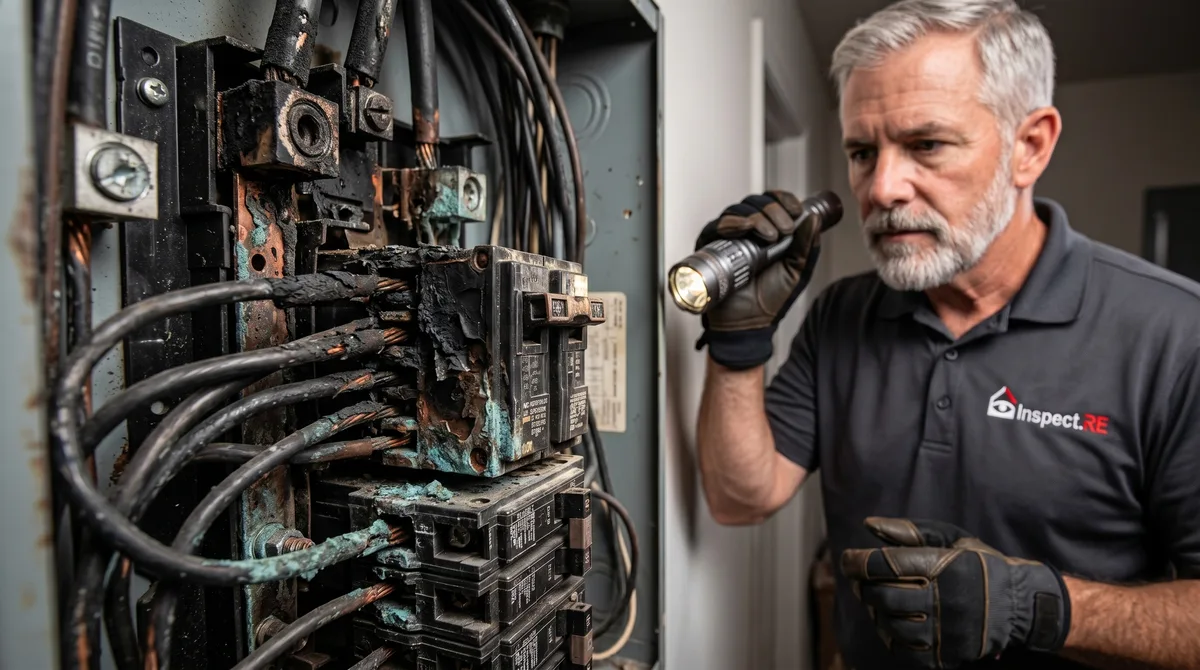
The property damage is where the case against defective Chinese drywall is strongest. Hydrogen sulfide reacts with copper to form copper sulfide, and with silver to form silver sulfide. Both reactions leave a visible black layer on exposed metal. Inspectors encounter it most frequently on:
- Bare copper ground wires inside outlet and switch boxes.
- Copper evaporator coils and refrigerant lines inside air handlers.
- Copper water and gas supply piping, where accessible.
- Silvered mirror backing, which develops spotting and pitting visible through the glass.
- Silver jewelry, silverware, and plated fixtures.
- Electronic components, including televisions, computers, game consoles, and small appliances, which tend to fail prematurely in affected homes.
The cost of replacing damaged systems and personal property adds up well before the underlying cause is typically diagnosed. In a home that has been occupied for several years with the condition undetected, damage progresses quietly and continuously.
Electrical and Safety Risks
Corrosion of copper contacts is not a cosmetic concern. It changes conductivity, and the consequences show up across the life-safety systems of the home.
Smoke alarms and carbon monoxide detectors with corroded contacts may fail to activate during an actual event. Circuit breakers and receptacles can run hot. Grounding integrity degrades, raising shock risk. Heating, ventilation, and air conditioning systems, where copper exposure is concentrated at the evaporator coil, often fail within 18 to 24 months of installation in affected homes, sometimes sooner.
These are not theoretical outcomes. They are documented patterns in the remediation case files that came out of the post-2009 federal investigations, and they are the reason the standard remediation protocol is as aggressive as it is.
When Should Concern Be Elevated?
Not every home warrants a full defective-drywall workup. The risk profile that most inspectors work from looks something like this.
Original construction or substantial remodeling between 2001 and 2009, with the heaviest concentration of confirmed cases falling between 2004 and 2007. Location in Florida, Louisiana, Mississippi, Alabama, Virginia, or one of the Carolinas. Construction in a known hurricane rebuilding zone, particularly following Katrina, Rita, or Wilma. A property history that includes repeated HVAC failures, multiple replaced appliances, or occupant complaints of persistent indoor odors. Any prior insurance claim or disclosure document that references indoor air quality, material defects, or early HVAC component failure.
Geographic concentration matters, but it is not the whole story. Affected shipments did make their way outside the Southeast during peak import years, including to the western United States. The construction date tends to be the more reliable indicator. A 2006-built home in California may still warrant screening, even if the local prevalence is low.
Chinese Drywall Inspection Checklist
What follows is the visual sequence most experienced inspectors run through on a suspected property. Homeowners and buyers can cover much of it themselves during a second showing. Doing so will not replace a professional evaluation, but it is often enough to decide whether professional testing is worth the cost.
1. Examine exposed copper wiring
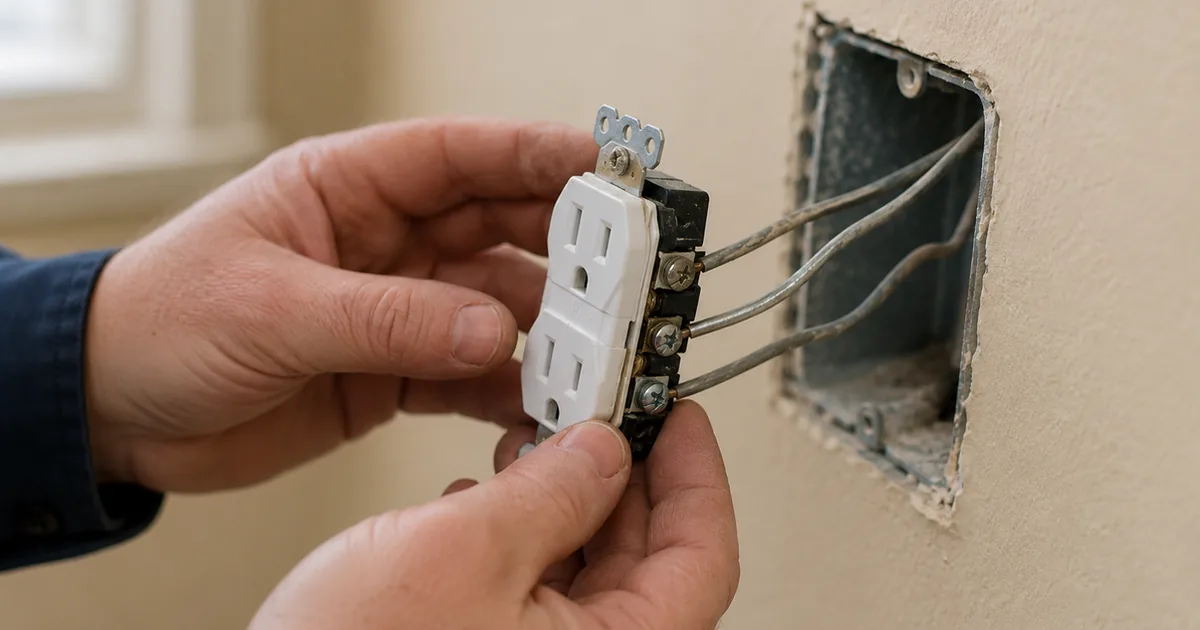
Face plates should be removed from a sampling of outlets and switches, ideally one in a bedroom, one in a bathroom, and one near the HVAC return or panel. The item to evaluate is the bare copper ground wire. Healthy copper looks warm, reddish, sometimes dulled with age but unmistakably copper-colored. Suspect copper looks charcoal, sooty, sometimes with a bluish cast.
A ground wire that is noticeably darker than the insulated conductors sitting right next to it is the classic sulfide-corrosion signature. Wiping the conductor with a clean white cotton cloth will transfer black residue if copper sulfide is present. That residue photographs well and is worth documenting at the time of observation.
2. Inspect HVAC components
The air handler access panel should be opened where the configuration allows. Evaporator coils in a home without defective drywall are copper-colored and relatively clean. Coils in an affected home are black, often with visible pitting. The refrigerant line set will usually show the same darkening where it passes through the cabinet.
Worth asking the listing agent: how old is the system, and has it been serviced recently? A unit installed within the last two or three years that already looks black is a substantial warning sign. Cases of brand-new coils blackening within twelve months of installation are well documented in the remediation literature.
3. Evaluate indoor air
The property should be entered cold, before anyone has opened windows, lit candles, or applied air fresheners. The odor associated with defective drywall is faint but recognizable. Descriptions vary. Rotten egg, struck match, and fireworks are the three most common.
Concentration tends to be higher in closets, where air exchange is limited, near HVAC returns, and during periods of high heat and humidity. A sulfur odor localized to a water heater, floor drain, or plumbing trap is generally a different issue entirely and should not be confused with drywall off-gassing. Drywall odor is distributed throughout the home rather than traceable to a single fixture.
4. Inspect mirrors, fixtures, and exposed metal
Black spotting or pitting visible through the glass of a bathroom mirror is a reliable secondary indicator. Chrome faucets, doorknobs, metal picture frames, and light fixtures that show atypical tarnishing, particularly in rooms that do not regularly get humid, are worth noting.
5. Search for manufacturer markings
Drywall sheets often retain printed markings on the reverse face. The attic is the most productive search location, especially along the edges where drywall meets ceiling framing. Garage ceilings and unfinished closet walls are secondary options, as is the back side of drywall visible behind removable outlet plates in some construction configurations.
Markings of concern include Chinese characters printed directly on the sheet, the phrase “Made in China,” manufacturer names from the list above, and date codes in the 2005 to 2008 range. Not every affected home has clearly marked sheets. Markings were inconsistent from plant to plant, and some sheets had none at all. Their absence does not rule out defective product; their presence is definitive.
6. Review indirect indicators
A property with three or more of the following in its history should be escalated to professional testing:
- Multiple HVAC failures in a short time frame, particularly on newer equipment.
- Repeated failures of consumer electronics without another obvious cause.
- Silver items that tarnish unusually quickly.
- Black residue on polished metal that cleans off but returns.
- Prior insurance or disclosure references to air quality or material defects.
7. Obtain professional testing
Non-destructive X-ray fluorescence screening, commonly referred to as XRF, is used by some inspectors to measure strontium and sulfur concentrations in installed drywall. Defective Chinese product generally reads substantially higher on strontium than domestic drywall.
A cautionary note on XRF. InterNACHI has published guidance specifically warning against reliance on XRF alone as a definitive test. The method is useful as a screening tool. It is not a substitute for laboratory analysis of a physical drywall sample, which remains the standard of confirmation for insurance, disclosure, and legal purposes. Any inspector who presents XRF as a standalone final answer is oversimplifying.
California Disclosure Requirements
Sidebar: California Transfer Disclosure Statement (TDS)
Under California Civil Code §1102 et seq., most sellers of residential real property (one to four units) are required to deliver a Real Estate Transfer Disclosure Statement to the buyer. The TDS asks the seller to disclose, among other things, any known material defects in the property, including substances, materials, or products that may be an environmental hazard.
Defective Chinese drywall, where known or reasonably suspected, falls squarely within the category of a material defect that must be disclosed. A seller who is aware of confirmed or suspected defective drywall and fails to disclose it on the TDS may face liability under California law.
Buyers should request the TDS and the Natural Hazard Disclosure Statement early in the transaction, review the seller’s responses carefully, and follow up in writing on any ambiguous or blank responses. Certain counties have additional local disclosure requirements that supplement the statewide form.
This sidebar is general information, not legal advice. For a specific transaction, consult a California real estate attorney.
How Professional Home Inspectors Address the Issue
A standard home inspection, conducted under the InterNACHI Residential Standards of Practice or comparable industry standards, is not specifically designed to detect defective drywall. General inspectors evaluate structural components, the roof, plumbing, electrical systems at the panel, HVAC operation, and major appliances. They may notice blackened wiring or corroded coils during that work. They are not obligated to pull receptacle covers, crawl the attic in search of manufacturer stamps, or arrange XRF screening.
For a property in the risk window, a targeted defective-drywall inspection should be requested explicitly. Three questions are worth asking before signing an inspection agreement. Does the standard scope include screening for defective drywall. If indicators are observed, what is the protocol for follow-up. And, if XRF screening or laboratory sampling is needed, can the inspector coordinate it.
The cost of a targeted screening varies but typically adds several hundred dollars to a standard inspection fee. In any property built or remodeled between 2001 and 2009, that figure is small relative to the cost of missing the condition entirely.
What to Do If Defective Drywall Is Suspected or Confirmed
The U.S. Consumer Product Safety Commission, working jointly with HUD, issued an Interim Remediation Guidance in 2011 that remains the industry benchmark. The sequence below is consistent with that guidance and with common practice in affected markets.
Document everything. Photographs of suspect wiring, HVAC components, manufacturer markings, and any visibly corroded fixtures should be recorded and date-stamped. This documentation will matter during negotiation, disclosure, and any subsequent legal proceeding.
Obtain laboratory confirmation. The CPSC identification protocol pairs visual inspection for sulfide corrosion patterns with confirmatory chemical testing. For any matter that may involve insurance or litigation, certified laboratory analysis of a physical sample is the standard. Several environmental laboratories in the United States perform the analysis at modest cost relative to the stakes involved.
Understand what remediation actually involves. The CPSC/HUD guidance calls for complete removal of all problem drywall, replacement of affected copper electrical wiring throughout the home rather than only visibly corroded sections, replacement of affected gas service piping, replacement of all smoke alarms and carbon monoxide detectors, replacement of affected HVAC equipment (often the entire system), and thorough cleaning of the interior. In plain terms, this is a gut renovation to framing and subfloor. Total costs run from the low tens of thousands of dollars for a small condominium into six figures for a typical single-family home, sometimes well into them. Sealants, encapsulation paints, and “odor-neutralizing” products marketed as remediation alternatives are not endorsed by CPSC or HUD, and in some cases make the problem worse by confining off-gassing within the wall assembly.
Address disclosure, insurance, and legal considerations. California sellers have a duty under the TDS to disclose known material defects, including defective drywall (see sidebar above). Buyers who discover the condition after closing may retain recourse against sellers, builders, or original importers, though statutes of limitations and the winding down of the original class-action proceedings have narrowed available remedies substantially. Standard homeowners insurance policies generally exclude defective materials and pollutants. Claims are routinely denied.
When the condition surfaces during an active transaction, buyers generally face three options: withdraw, renegotiate price to reflect the full cost of remediation, or require seller-funded remediation with full documentation before closing. Given the scope and duration of a proper remediation, a rushed pre-closing fix is difficult to verify and rarely advisable.
Engage qualified professionals. A California real estate attorney familiar with construction-defect cases is an appropriate early call. So is an independent remediation contractor who can produce a written scope and cost estimate before any commitment is made.
Prevention and Due Diligence
For new construction, custom builds, or substantial remodeling projects, a few practices reduce exposure going forward.
Documentation of drywall manufacturer, country of origin, and manufacturing date should be requested from the builder or general contractor in writing. Product from sources that cannot be reliably documented should be refused, regardless of price advantage. For owner-side oversight, photographs of sheet markings taken during framing inspections, before paint and finish, are worth retaining.
For any existing California home built or substantially remodeled between 2001 and 2009, defective drywall screening should be part of standard pre-purchase due diligence, not an optional add-on.
Questions worth asking any inspector working on an older property: Was copper wiring at receptacles and the HVAC evaporator coil specifically inspected for sulfide corrosion. Were any manufacturer markings observed on drywall in accessible unfinished areas. Were any atypical odors noted. Based on what was observed, is further XRF or laboratory testing recommended.
Conclusion
Defective Chinese drywall is a serious but identifiable residential construction defect, confined largely to a specific construction window and a known geographic footprint. California prevalence is lower than in the Gulf Coast states, but it is not zero. The visual indicators are consistent across affected homes. Professional testing protocols are established. Remediation is expensive and disruptive, but the condition is rarely a surprise by the time it reaches an experienced inspector’s eye.
Early identification during a real estate transaction is always less costly than discovery after closing. Buyers, sellers, and homeowners evaluating a California property within the relevant risk profile should engage a qualified home inspector familiar with the condition, request targeted screening where indicators are present, and consult the public resources maintained by the U.S. Consumer Product Safety Commission at cpsc.gov, the joint CPSC/HUD Interim Remediation Guidance, and the California Department of Public Health. Where any reasonable question exists about a property’s drywall, professional evaluation should be obtained before closing.
Schedule a California Home Inspection
Inspection.re serves buyers and sellers across San Diego, Orange County, the Inland Empire, Los Angeles, the Bay Area, and Sacramento. Every inspection is performed by an InterNACHI Certified Professional Inspector (CPI)® and includes a full 3D Matterport tour, LIDAR floor plan, infrared thermal scan, and drone roof inspection.
For properties built or remodeled between 2001 and 2009, ask about targeted screening during scheduling.
Schedule your inspection online → or call 1-888-88-INSP-9 (+1-888-884-6779).
Related reading
- Why infrared scanning matters in California homes — how thermal imaging detects hidden corrosion, moisture, and the kind of off-gassing residue that defective drywall leaves behind.
- How to read a home inspection report in California — what to do with the screening findings once they appear in your written report.